
Year in the Bible Week 38
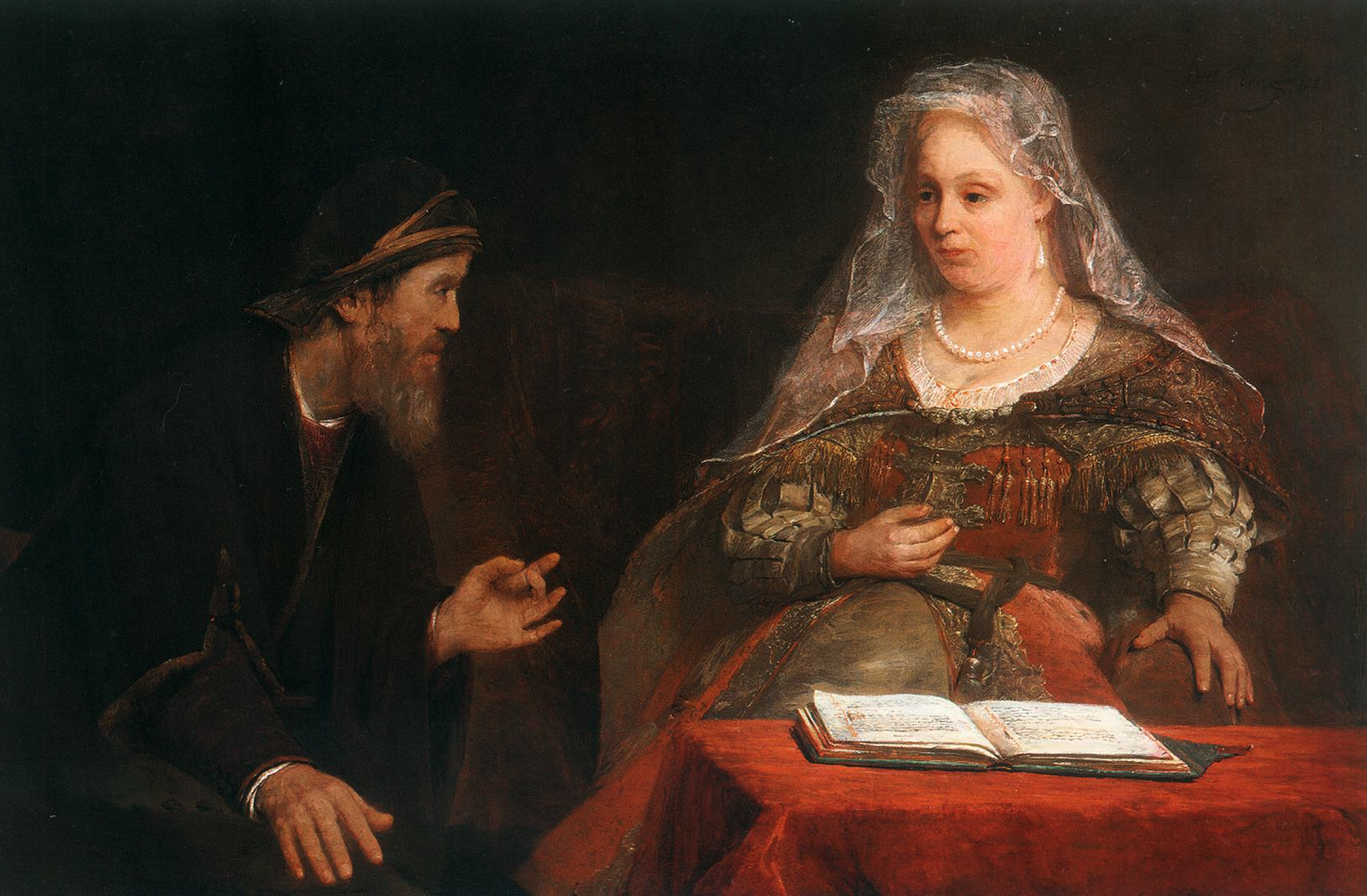
Esther and Mordecai by Aert de Gelder (1685)
God uses Queen Esther to encourage his people, to remind them that he is utterly sovereign, and when he is with his people he will be glorified, even in the face of immense opposition. This week we also read about Nehemiah’s work on the wall. The task should not have been possible with the opposition and treachery they faced, but they were able to complete the task in 52 days!
Here at the conclusion of the Old Testament the Jews are again beset on all sides. Those who have returned to the promised land are in constant fear from the people in the area, and the evil Haman is plotting their genocide. These final themes of Old Testament history, prepare God’s people for constant struggle and oppression, but God will sustain those who rely on him. Meanwhile, we continue to uncover how badly the world needs Jesus, and we get a little foreshadowing that the Messiah is coming soon.
This week’s companion art is from the Dutch master Aert de Gelder, painted during the Dutch Golden Age. Queen Esther was a star subject in the Dutch art of this period, and worth some deeper digging. The Dutch people related to Esther’s story wholeheartedly in the early 1600’s, as they were finally independent from Spain after the grueling 80 Years War. Like Babylon, Spain was large and oppressive, and it was also very catholic. Amsterdam had become a safe haven for Jews escaping the Spanish Inquisition, and the Purim holiday was allowed to be celebrated openly, with lots of colorful depictions of Esther. Queen Esther, the mighty Jewish hero, is the very embodiment of intuition, diplomacy and courage, helping a scrappy underdog defeat a giant, oppressive foe. From the period we have famous Esther paintings by Rembrandt, Jan Steen, and others, commissioned at a fascinating time in Dutch history.
As we conclude the Old Testament this week, it will be useful to look back on the book apart from its chronological origins and get back to the structure that we hold and read. The video below should help put things back in order.
After Haggai, Zechariah, and Malachi, Jewish teaching holds that God no longer spoke through prophets, and so any writings in the time between Malachi and the birth of Jesus could not, by definition, be divinely inspired. There is still great wisdom in the books from the period that appeared in the Greek Septuagint and adopted by the Catholic church, mostly 1 and 2 Macabees and Sirach (Ecclesiasticus), but they do not appear in the Bible.
Take a deep breath, folks. Next week we read about the birth of Christ!