
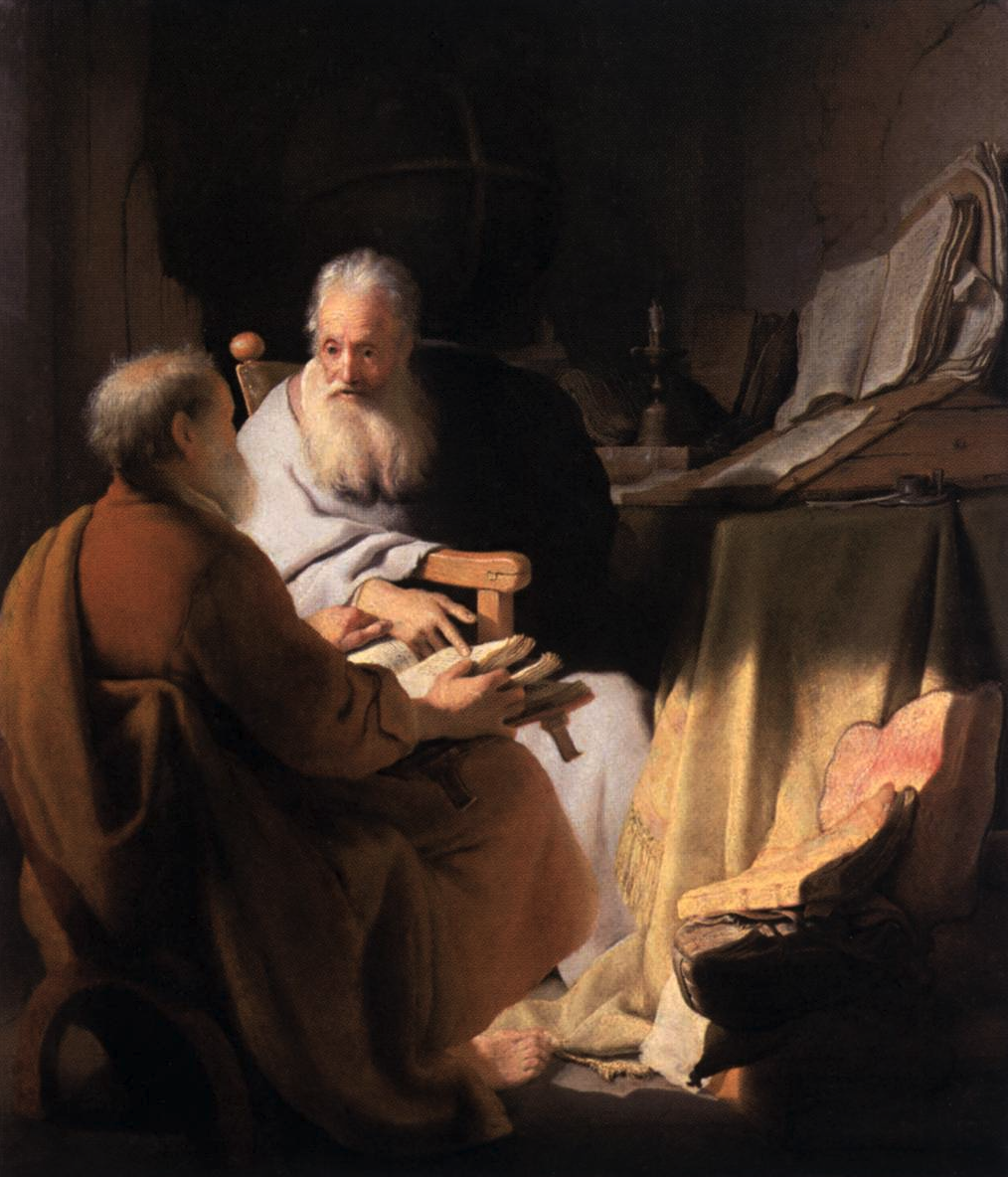
Two Scholars Disputing by Rembrandt (1628). Although the painting’s title doesn’t name Peter and Paul specifically, it is widely believed that this represents St Peter and St Paul in conversation, because the physical characteristics of these figures match other Rembrandt paintings which are specifically titled with the apostles’ names.
The end of this week finds us in the middle of Paul’s third missionary journey. For a great interactive map of the first two journeys, CLICK HERE.
On the second missionary journey Paul spent a long time (18 months) preaching in Corinth, which is considered to be one of the most challenging churches he planted. Corinth was a wealthy, coastal city with lots of lust, greed and pride. For a neat blog post with a quick look: CLICK HERE. He kept speaking into the church, writing them from Ephesus, and again from Macedonia, and spending time with them again. The difficult children get lots of attention!
We use Paul’s letters to help us live in a constant state of worship, even when cultural pressures and our fleshly desires would distract us from doing what matters most. Many of the worldly pressures and desires have changed over time, but as we read 1 Corinthians, we see an approach that serves us well to this day.
Continually seeking direction from the Lord, Paul is humble and honest about the direction he gives the people he shepherds.
He speaks into division with love and wisdom, giving his reasons when he needs to take a side.
He acknowledges the value of different gifts and contributions.
He encourages us to cooperate and participate fully, especially when we celebrate communion.
He ties the whole list together reminding us that God is love, and love is the thing we must all bring into our community without fail. Living without love means being without God.
In each letter God speaks through Paul to different people in different places, Jew and Gentile alike. Paul’s extensive training in the law and the prophets keeps him from getting distracted by the world or deviating from God’s eternal will for all creation. No wonder God chose him, and changed his life on the road to Demascus! He spent over twenty years going wherever he was sent by God to plant the seeds of faith, and to speak the unadulterated word of God. For this reason he is sometimes called the “New Testament Isaiah.”
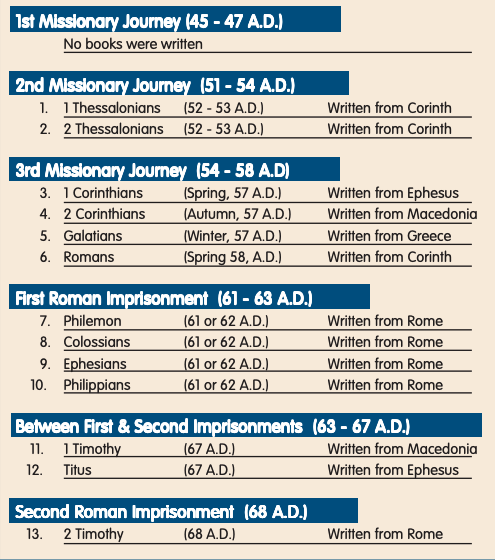
Next week we get to focus on Paul’s masterful letter to the Romans, widely considered to be the pinnacle of his teaching. Keep reading!