
Year in the Bible Week 38
Week 38
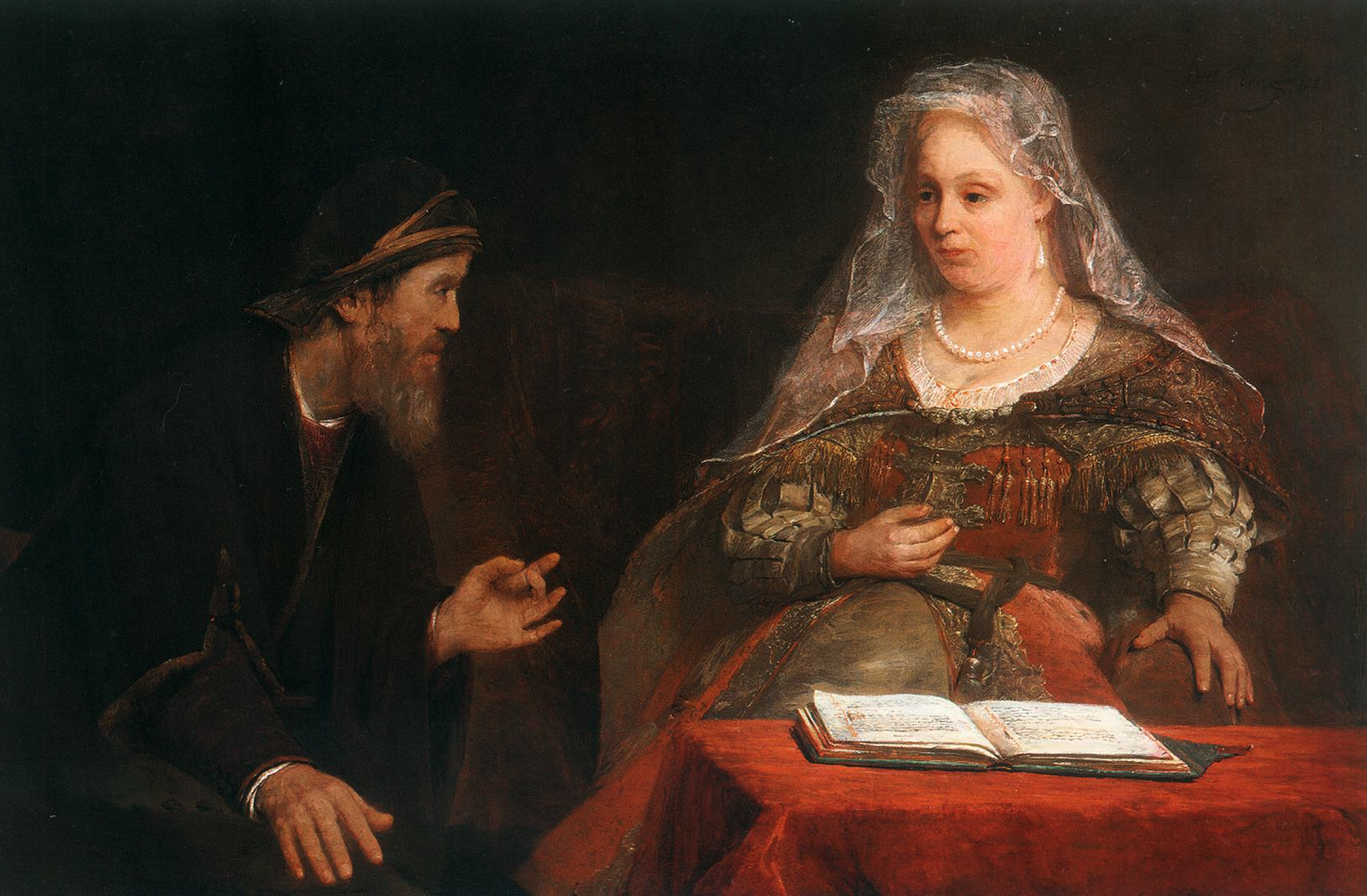
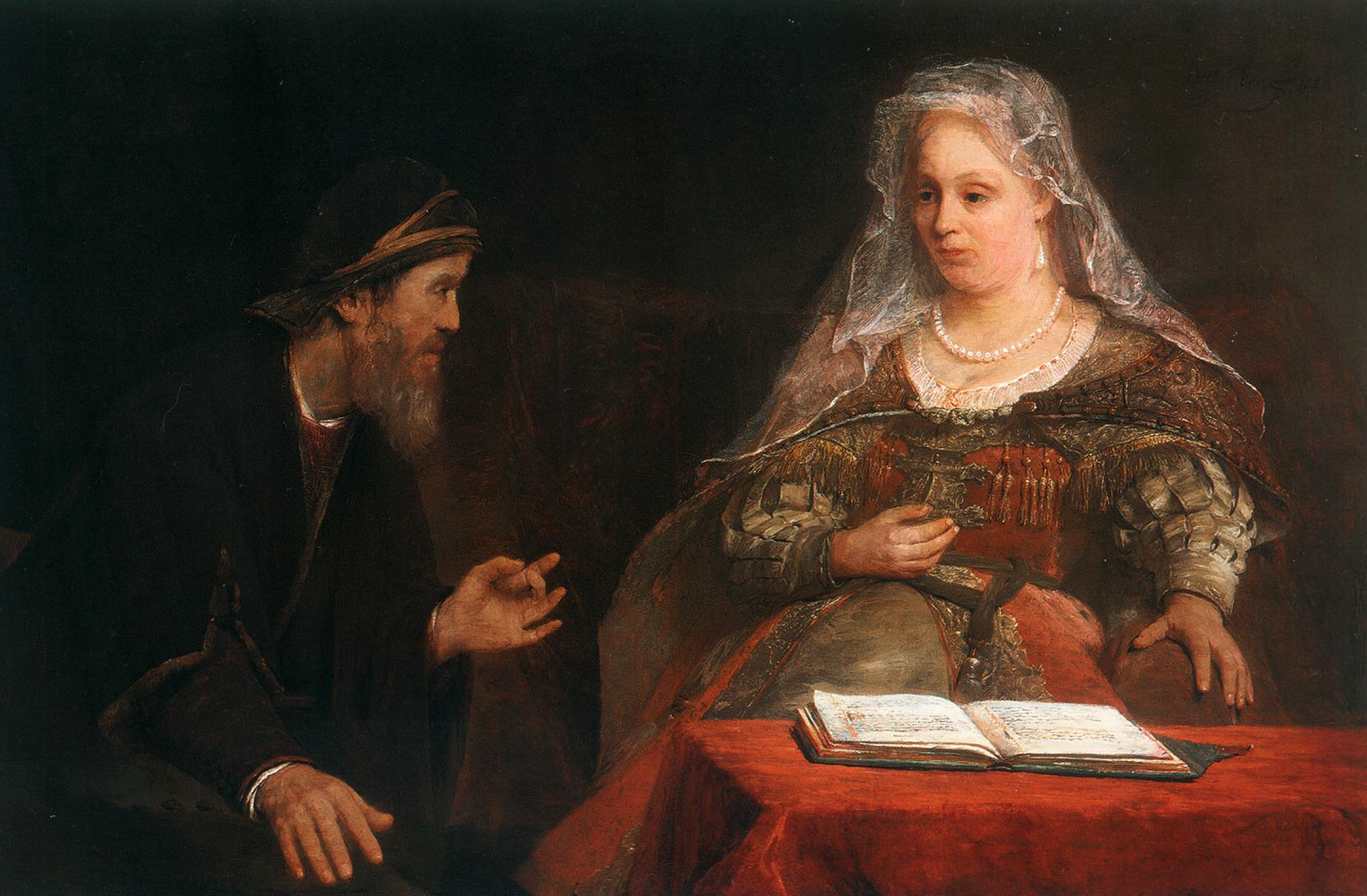
Esther and Mordecai by Aert de Gelder (1685)
God uses Queen Esther to encourage his people, to remind them that he is utterly sovereign, and when he is with his people he will be glorified, even in the face of immense opposition. This week we also read about Nehemiah’s work on the wall. The task should not have been possible with the opposition and treachery they faced, but they were able to complete the task in 52 days!
Here at the conclusion of the Old Testament the Jews are again beset on all sides. Those who have returned to the promised land are in constant fear from the people in the area, and the evil Haman is plotting their genocide. These final themes of Old Testament history, prepare God’s people for constant struggle and oppression, but God will sustain those who rely on him. Meanwhile, we continue to uncover how badly the world needs Jesus, and we get a little foreshadowing that the Messiah is coming soon.
This week’s companion art is from the Dutch master Aert de Gelder, painted during the Dutch Golden Age. Queen Esther was a star subject in the Dutch art of this period, and worth some deeper digging. The Dutch people related to Esther’s story wholeheartedly in the early 1600’s, as they were finally independent from Spain after the grueling 80 Years War. Like Babylon, Spain was large and oppressive, and it was also very catholic. Amsterdam had become a safe haven for Jews escaping the Spanish Inquisition, and the Purim holiday was allowed to be celebrated openly, with lots of colorful depictions of Esther. Queen Esther, the mighty Jewish hero, is the very embodiment of intuition, diplomacy and courage, helping a scrappy underdog defeat a giant, oppressive foe. From the period we have famous Esther paintings by Rembrandt, Jan Steen, and others, commissioned at a fascinating time in Dutch history.
As we conclude the Old Testament this week, it will be useful to look back on the book apart from its chronological origins and get back to the structure that we hold and read. The video below should help put things back in order.
After Haggai, Zechariah, and Malachi, Jewish teaching holds that God no longer spoke through prophets, and so any writings in the time between Malachi and the birth of Jesus could not, by definition, be divinely inspired. There is still great wisdom in the books from the period that appeared in the Greek Septuagint and adopted by the Catholic church, mostly 1 and 2 Macabees and Sirach (Ecclesiasticus), but they do not appear in the Bible.
Take a deep breath, folks. Next week we read about the birth of Christ!
Year in the Bible Week 37
Week 37
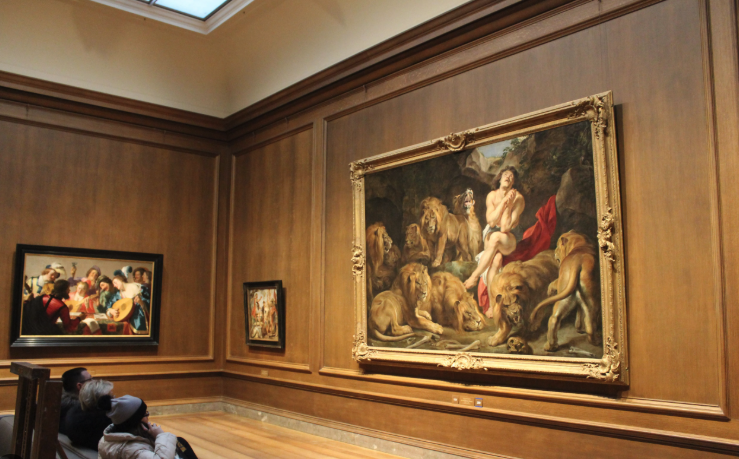
Daniel in the Lions’ Den by Peter Paul Rubens (c. 1614=1616), on display at the National Gallery of Art, Washington, D.C.
Contrary to the representation in Rubens’ masterwork, Daniel was likely more than 80 years old when he was thrown in with the lions. We can imagine a man of great poise and power, who was given great authority in the kingdom, but who had no physical way to protect himself from harm. When Darius saw what God did for Daniel, he proclaimed that every corner of his realm should respect and honor the God of Israel. Just like in the upcoming story of Esther, and in the New Testement. God has uses an earthly rulers to carry out his sovereign plan. .
For those who are interested in apocryphal writings, there is a fun, alternate lions den story in the extra bits of Daniel (Daniel 13 & 14) from the apocrypha. It’s a very different account, but the moral remains the same; if God is with you you simply cannot be destroyed. We hear more and more of this kind of protection and provision toward the end of the exile, and it’s really refreshing to get some blessing from God after two generations of discipline.
As we come to the chronological end of the Old Testament, there is a lot of hope to be had, but a lot to be concerned about as well. The prophets are once again speaking encouragement, so we know that God will provide, but the people still don’t have the transformed hearts we read about in Ezekiel snd Jeremiah. Those are promises from him, but only Jesus could fulfill those promises. The video below shows us some of the triumphs and tragedies we are reading about this week and next.
This coming week we get the story of Esther, which is better than anything Hollywood could write. We will also read about the rebuilding of Jerusalem’s walls, even though God’s people face great opposition as they build. The truth beats fiction every time.
One final note this week: Ezra, Nehemiah and Ester are the final historical books of the Old Testament. Remember that God’s story in the Old Testament is a cliff hanger, and that helps the historical books lead into the wisdom literature. Ezra, Nehemiah, and Ester provide a launchpad and context for the wisdom books that follow. If you read the bible cover to cover, the next book after Esther is Job!
Year in the Bible Week 36
Week 36
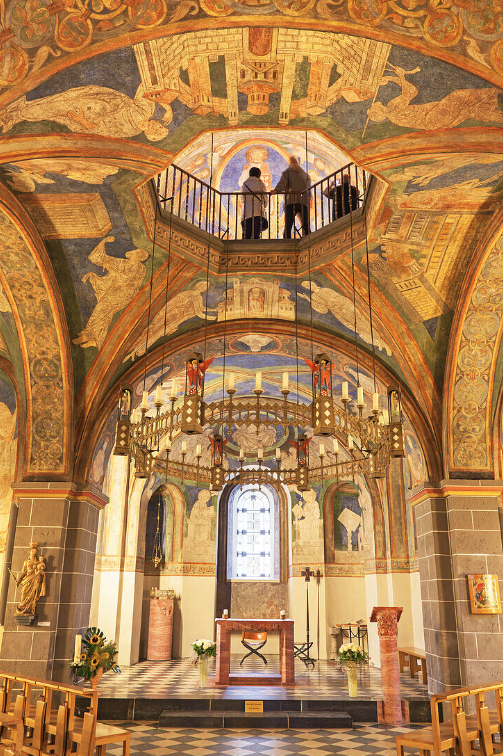
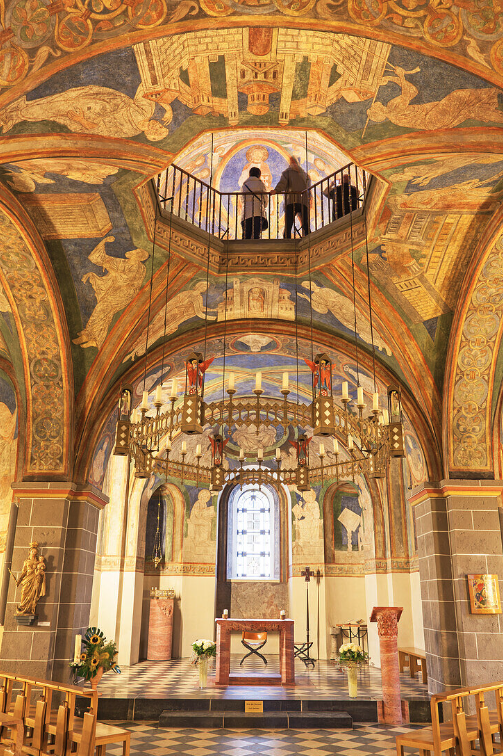
Ezekiel’s Vision of the New Temple at the Doppelkirche in Schwarzrheindorf, Germany (c. 1150, artist unknown),
This week we pour over the genealogies all the way back in 1 Chronicles, and its chronological placement here suggests that this part may have been written in Babylon, but it is widely agreed that Chronicles was compiled post-exile, after God’s people were released. The people needed a legal record of heirs to the land, because God wanted them to reclaim it properly, without strife. The important part is that Chronicles facilitated the orderly repatriation of the people back to the Promised Land . God is specific about the distribution of the land, and the location of the temple, in a city named “The Lord is There.” The vision of the healing stream is one of my favorites in the Bible. God’s healing and cleansing power grows as it flows, and everything that it touches flourishes. What great hope this brings!
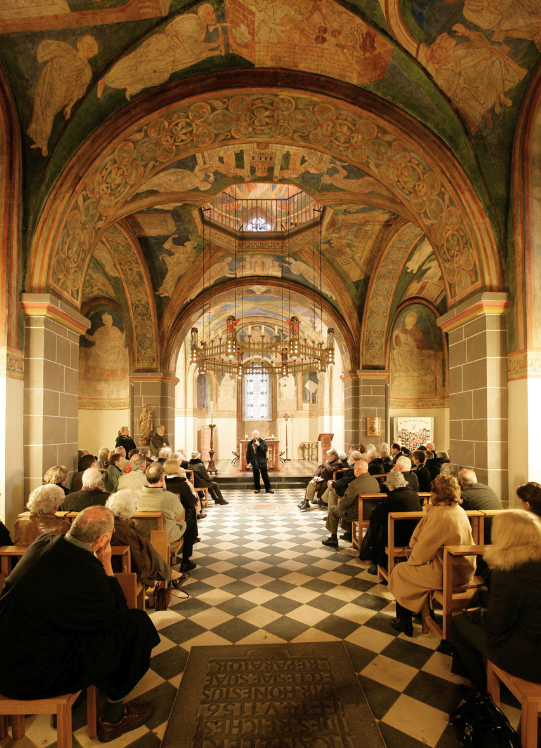
This week Ezekiel’s eschatological vision has accompanying art from a 12th century frescoed church in Germany, Like so many wondrous art works from that era, the artist is simply an uncredited artisan, doing his best for the Lord. The church where these amazing frescoes were done is a small one, but magnificent.
In the coming week Nebuchadnezzar will no longer be king, and just like God promised, his kingdom will be torn apart. First, however God gives Babylon’s armies victory over Egypt as a reward for destroying Tyre and its boastful people. as God continues to move mightily this week. In just three short weeks the Old Testament will be done, and the New Testament begins. Keep reading!
Year in the Bible Week 35
Week 35
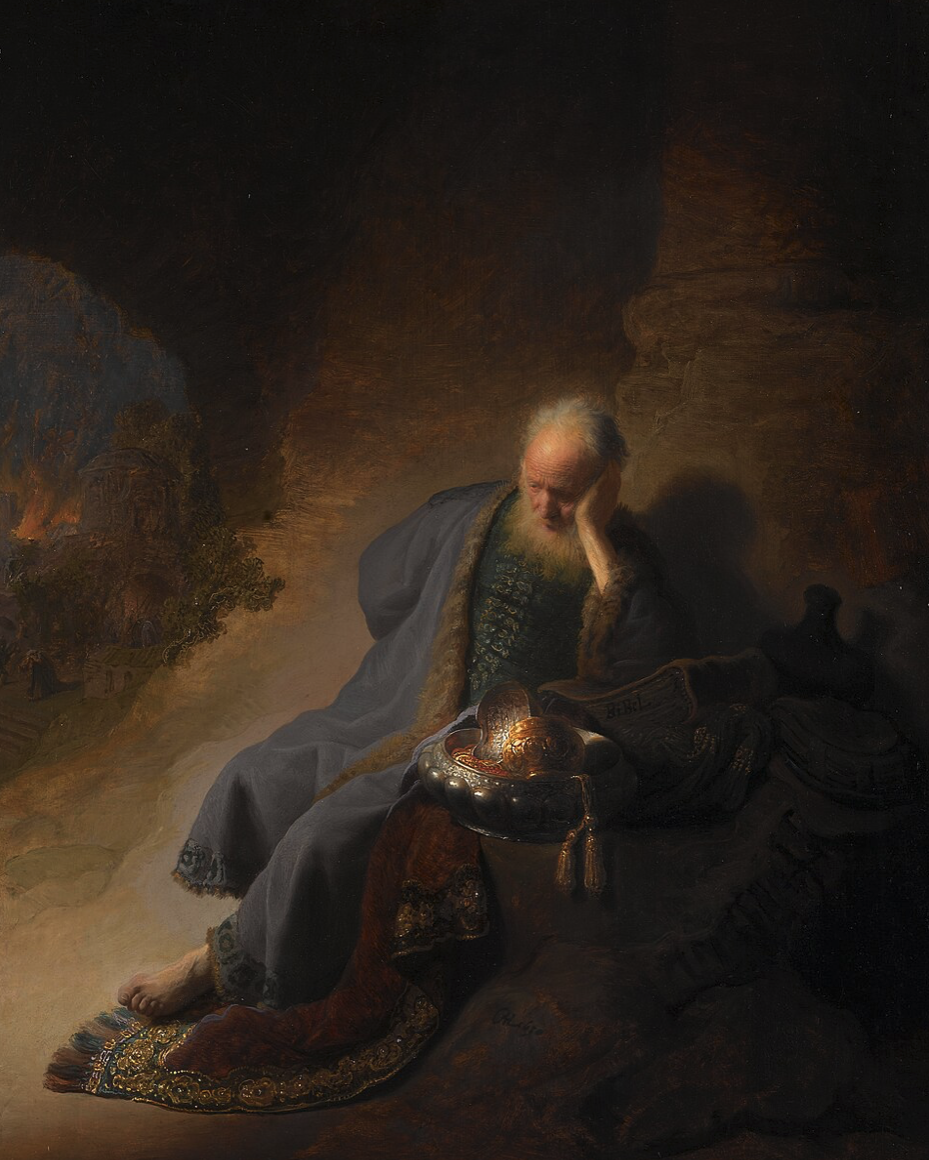
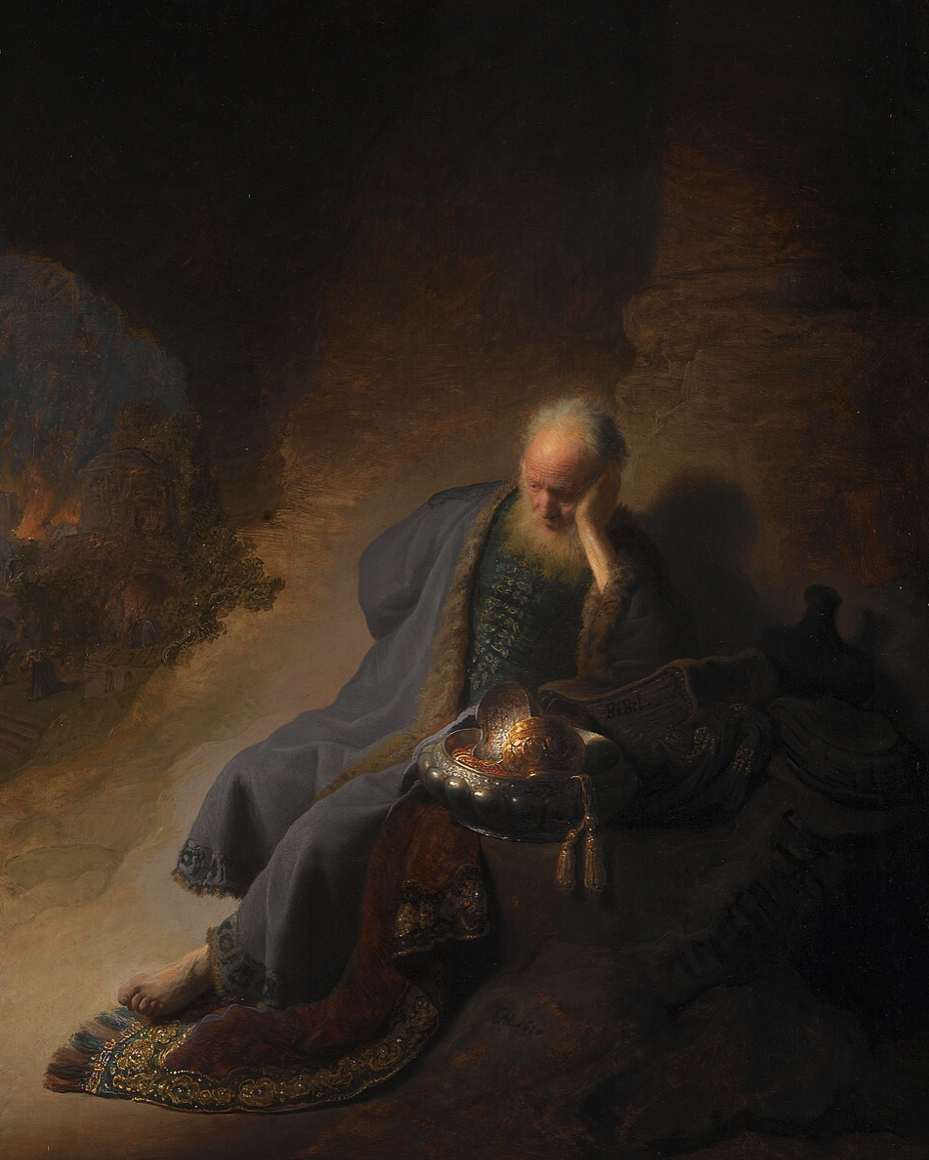
Jeremiah Lamenting the Destruction of Jerusalem by Rembrandt (1630), one of the most famous works from his Leiden period.
Today I encourage you to take a long look at the Rembrandt’s painting of Jeremiah Lamenting the Destruction of Jerusalem to see how well he captures the feeling of loss. Only the true masters of the craft can capture the human experience so well! You can feel the overwhelming sorrow of Jeremiah as he contemplates the desstruction of Jerusalem and the temple built by Saul. After God’s presence left, the temple that was regarded with fear and trembling for centuries was just another building. It was easy to strip tons of bronze and other precious metals from it and burn it to the ground.
The remnant left in Jerusalem continued to hear from God through Jeremiah, but people were not listening. Ignoring God’s warnings, they run down to Egypt, thinking that they were escaping a reprisal by Nebuchadnezzar. Once again, disobedience would only lead to destruction.
Back in Babylon, Ezekiel was also giving unwelcome advice. God’s word says Ezekiel was regarded as an entertaining street performer who would say and do scary things, but no one heard the lessons, and nobody applied the teaching. Remember that Ezekiel was the son of a chief priest, and his words would have carried a lot of weight if not for the hardened hearts of the people.
After Jerusalem is destroyed, God will move quickly to bring his chosen people back to the promised land. In the next two weeks of reading, God will smite Egypt, remove Nebuchadnezzar, and start sending his people home. He is faithful!
Year in the Bible Week 34
Week 34
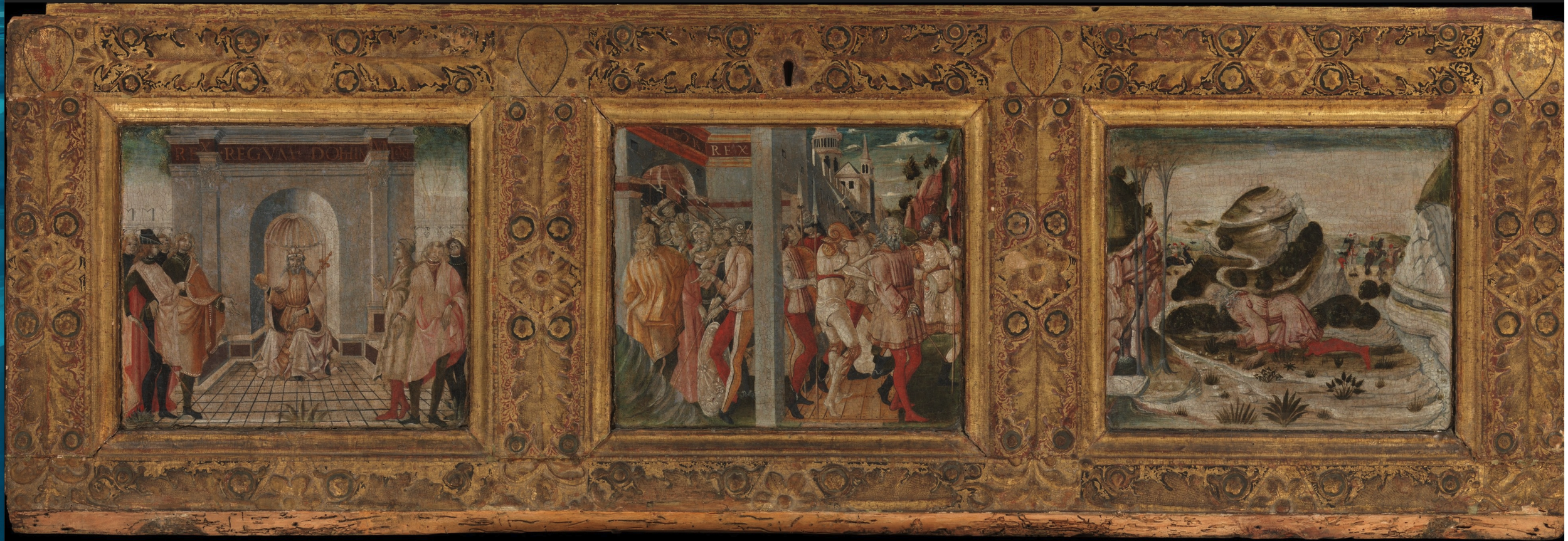
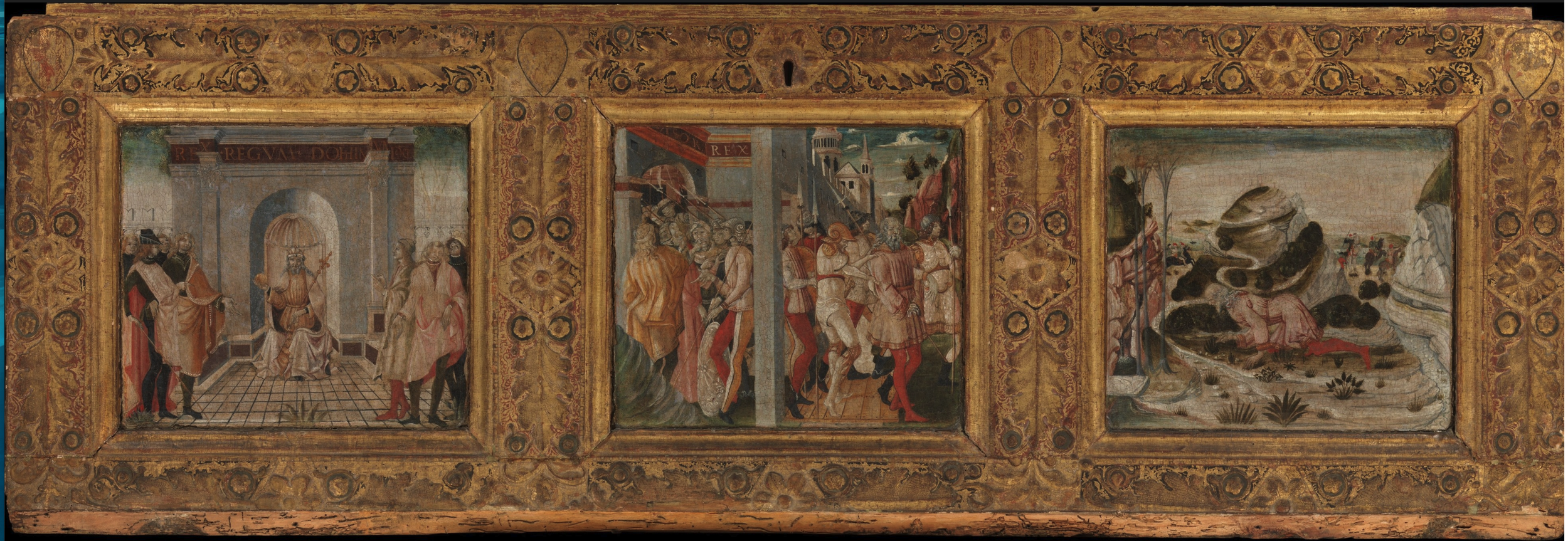
Scenes from the Life of King Nebuchadnezzar by Nicola di Maestro Antonio (c. 1490), the front of a painted chest.
Throughout history human kingdoms rise and fall, but Daniel’s vision regarding Nebuchadnezzar’s dream gave God’s perspective on all of it
Every human king will pass, but Jehovah will remain sovereign forever. Remembering all the way back to King Saul, God warned his chosen people not to elevate a man to be the king, for God himself would be their king forever by covenant. Giving them what they wanted, God annointed leaders for his people, and when the leaders were faithful, he blessed the nation of Israel with victory after victory, and enormous wealth and influence. There were other powerful kingdoms like Tyre, Assyria and Egypt when God’s people were at their height of wealth, power and influence, but they were no match for God’s miraculous protection and intervention. Sadly, after God decided to remove his protection and intervention, Samaria, then Jerusalem, went the way of all human kingdoms. By the time God’s presence finally left the temple, their destruction was assured. He would now protect his people in distant captivity. Jerusalem at the end was just a weak, wealthy, worldly city, ripe for conquest and looting. God used Nebuchadnezzar to humble them.
God himself was giving Nebuchadnezzar enough power to carry out the divine plan, so the pagan king naturally thought that he was god-like.. Nebuchadnezzar had his own Gods, and he erroneously thought he was the manifestation of them on earth, but nobody could show him otherwise. Babylon would consolidate all the aging empires, but like all human empires, his influence would not last long. First Medea-Persia, then the Greeks, and finally under the Romans, God would fully consolidate the jews and gentiles, and then bring the Messiah. God’s plan for bringing creation back to himself would unfold over hundreds of years, and many kings and kingdoms would be used as instruments of his divine will.
God allowed Nebuchadnezzar to rise quickly and eclipse many once-proud peoples. The video below is a bit cheesy, but it tells the story unflinchingly from a perspective where God’s chosen people only play a minor role, a role seems to match their diminished influence during this period.
This coming week we will see Jerusalem finally succumb, and things get really weird for Jeremiah. We will read the last of Jeremiah’s prophesies, and we will start the book of Lamentations, which he is credited with writing. Keep reading!
Year in the Bible Week 33
Week 33
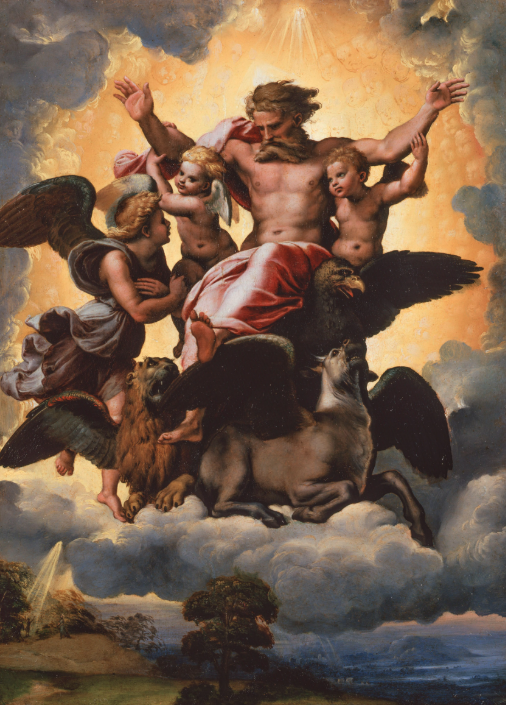
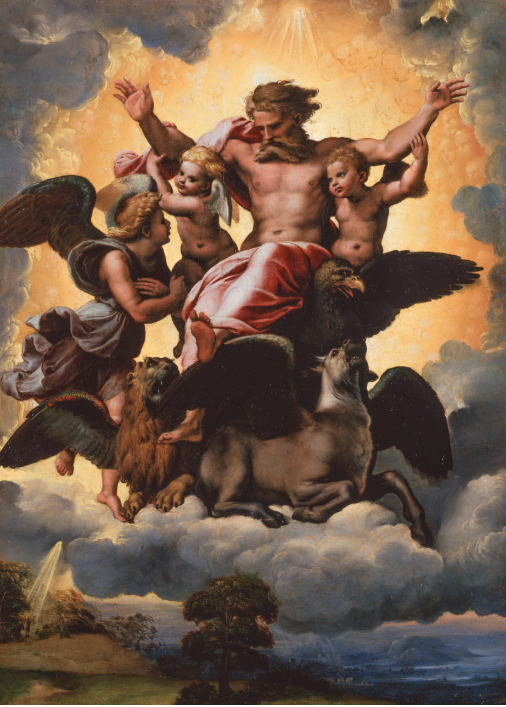
Ezekiel’s Vision by Raphael (c. 1518)
Jeremiah never went to Babylon, but he watched as thousands were taken there, just as God had said. What a tragedy. At the time of the siege of Jerusalem Jeremiah was over 70 years old, and he had to stay and speak God‘s truth to a city stripped of wealth and starving after squandering God‘s blessings. Baruch, acting as scribe, may have been Jeremiah’s only real companion during this time, even though King Zedekiah himself knew that Jeremiah was a man of God, speaking the horrible truth. Some other admirers still helped, but the persecution of God’s “weeping prophet” is painful to read about. As the bible prepares us for Jerusalem to get destroyed, Jeremiah’s experience will point allegorically to the struggles of the faithful when chaos and treachery unfold around us to this day.
Among the refugees in Babylon, God raises a young man named Ezekiel with a wondrous, powerful vision and commissions him to be a prophet to the nation. God tells Ezekiel not to be afraid of the harsh words and rough treatment he will receive, and has him eat a scroll with words of “lamentation, mourning and woe” before sharing those words with the people. This symbolizes that this new prophet must internalize the words and will of God before preaching them, and confirms that God’s spirit was profoundly with Ezekiel. Check out this video for a preview of the visions to come:
Next comes the destruction of Jerusalem and seventy years of exile. We will stay in the Old Testament for a few more weeks before God’s love story to his people takes its wonderful turn to a new, everlasting covenant that covers the whole world. Keep reading!
Year in the Bible Week 32
Week 32
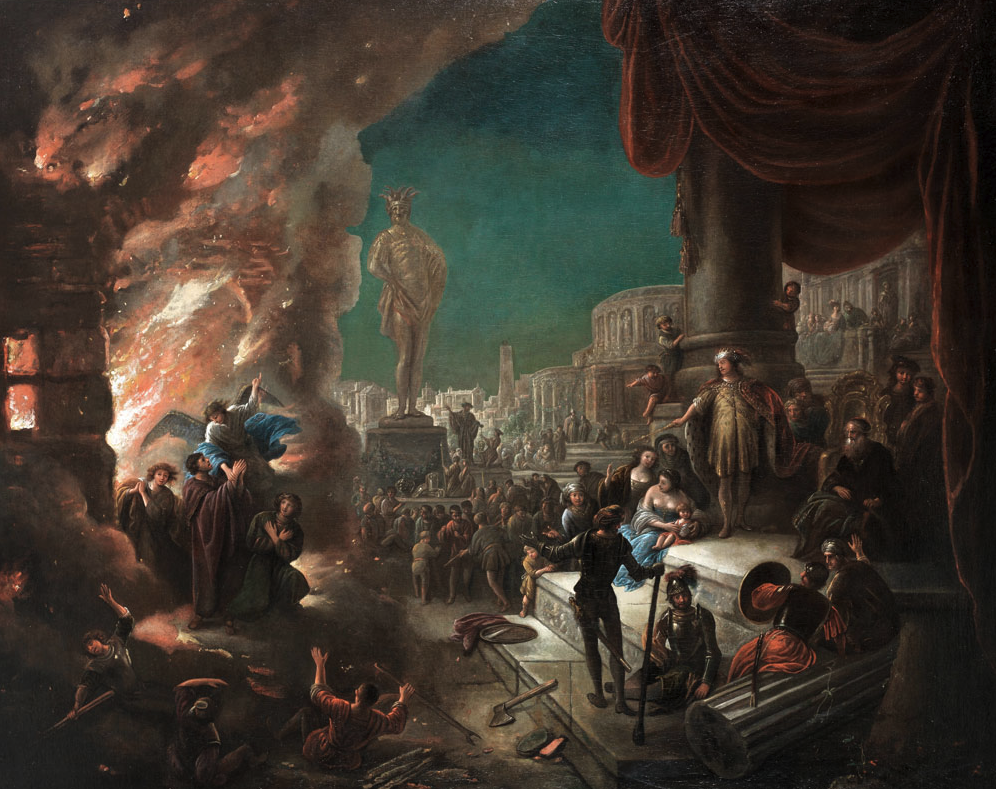
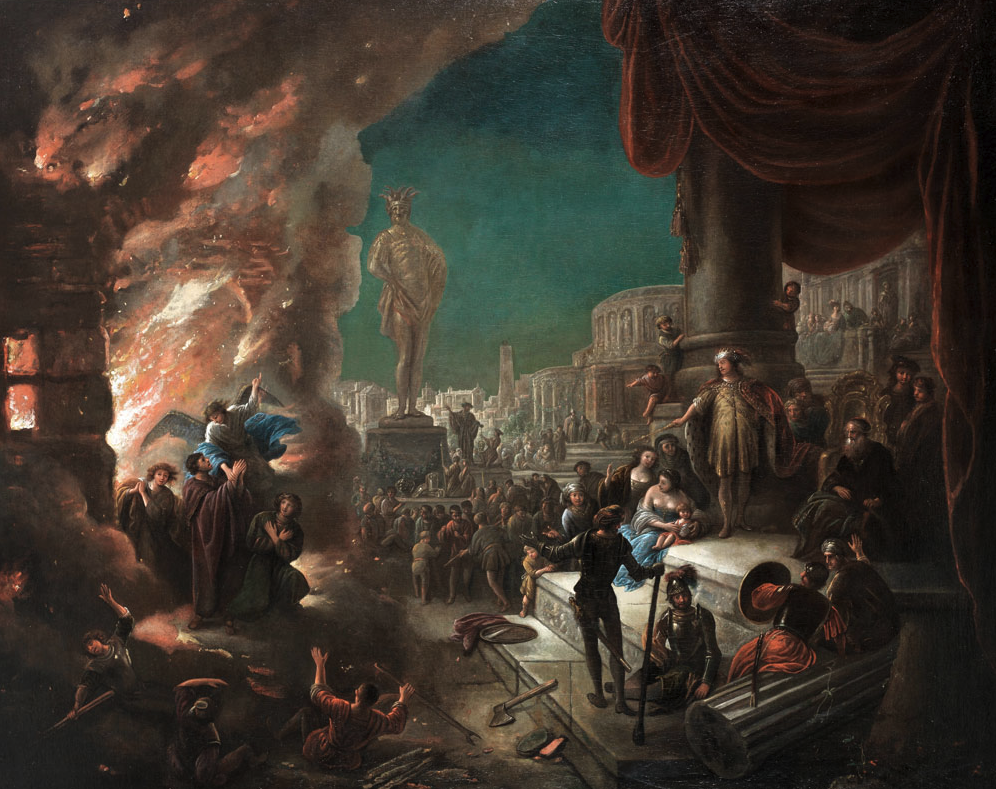
Shadrach, Meshach and Abednego in the Fiery Furnace by Jacob Willemsz. de Wet (c.1650)
God promised he would not destroy the nation in Josiah’s lifetime, but after he died thing got terrible quickly. After Josiah died in poorly-chosen battle with Egypt’s pharaoh Neco (2 Chron 35:20-27). Josiah’s son Jehoahaz never had the chance to rule, because after three months Neco took him to Egypt as a prisoner, and Jehoakim was installed as a puppet king. A couple years later Neco was defeated by Nebuchadnezzar, and now Babylon was the bully. During this important time God is speaking through Jeremiah, as well as Zephaniah, Nahum, and Habakkuk, clearly telling his people that their time is up. Because of the importance of this message, and because of its truth, the Bible timeline is very slowly here.
Throughout Idrael’s history God would destroy anyone who opposed them, sometimes without his people ever having to fight. Still, the nation forgot that all God ever has to do is move the pieces on the board just a little and great victory or great suffering will result. Now God allows the neighboring nations to be carrion birds, picking apart a Jerusalem that is not quite dead, but not strong enough to fight.
The exile of God‘s people from the promised land begins with just a few faithful men, and God is with them. God will be with his people in exile, and Daniel and his friends are the first to experience his protection firsthand. Most of us believe that it was Jesus Christ who was walking with Shadrach, Meshach, and Abednego in the fiery furnace. Knowing that Jesus is with us in the fire has given comfort to millions throughout the ages who have gone through trials.
As tragic as the next few chapters will be, I am looking forward to next week’s reading because it contains the verse in the Bible that finally let me give God control over my life, Jeremiah 29:7. We also get Jeremiah 29:11, an anchor for every believer. All praise to God!
Year in the Bible Week 31
Week 31
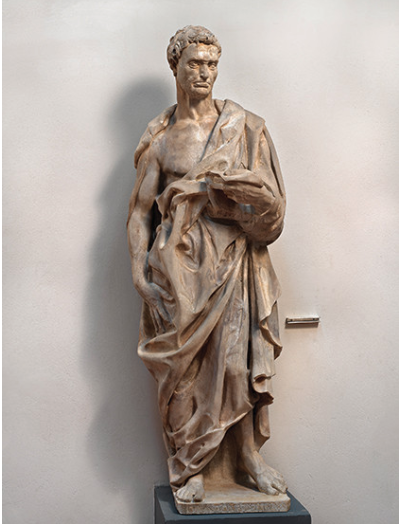
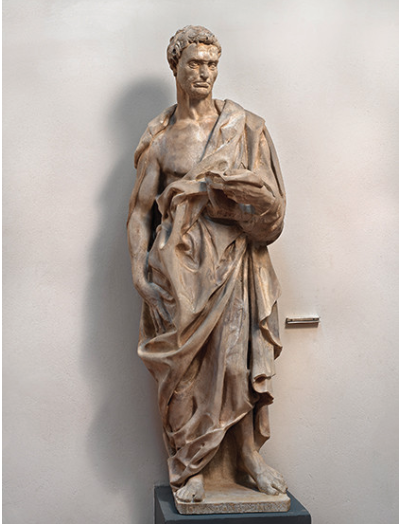
Jeremiah by Donatello (around 1427)
This week brought the end of Hezekiah’s benevolent reign, and now the Bible turns abruptly and speaks very poorly of his son Manasseh, who became king after Hezekiah died. We will hear Manasseh’s name mentioned a little more later, but despite his 55-year reign, God’s Word does not record any military campaigns, political alliances, or social interaction. We covered his entire 55 years in one day of reading!
When Manasseh’s grandson Josiah takes the throne he does his best to return the nation to worship the Lord, especially after the book of the law is discovered during temple renovations. We also get to start the amazing book of Jeremiah, which is eloquently described in the Bible Project video below. Jeremiah 1:4-10 have been a source of comfort and confidence for countless generations of believers!
One might guess that during Josiah’s reign, when the Lord was being lifted high and the idols and pagan altars were being destroyed, that God would smile on these good deeds and restore Israel to good fortune. No doubt many false prophets spoke during this time, reassuring the people and telling them that God wasn’t angry anymore, but Jeremiah was telling a much scarier story, and his visions would be the ones that came to pass.
Next week brings Nebuchadnezzar’s siege and victory over Jerusalem, and selected captives get taken back to Babylon. The book of Daniel begins there, in Nebuchadnezzar’s court, so now the Greatest Story Ever Told will be told in two places; the waning Jerusalem and the ascending Babylon. Keep reading!
Year in the Bible Week 30
Week 30
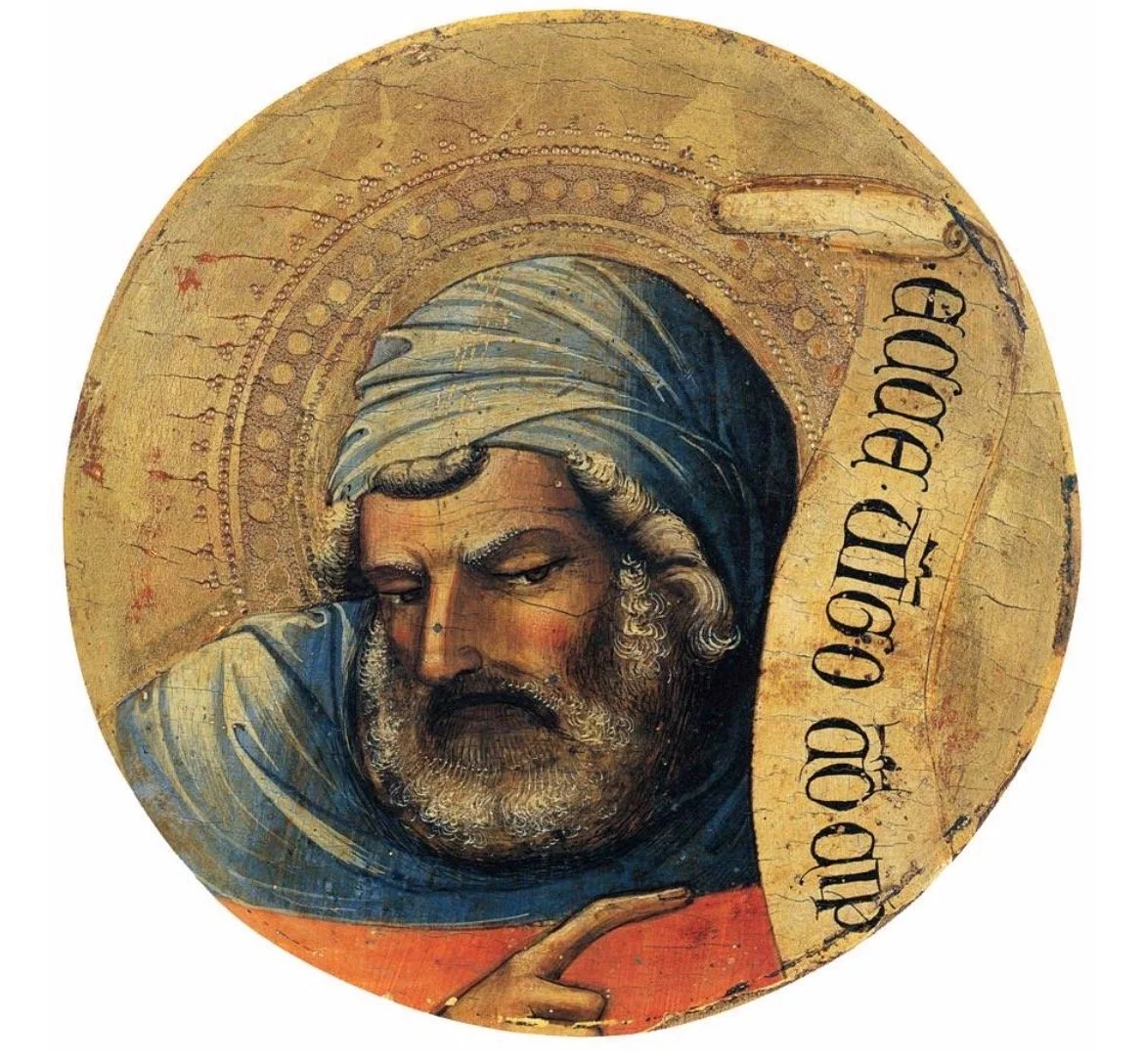
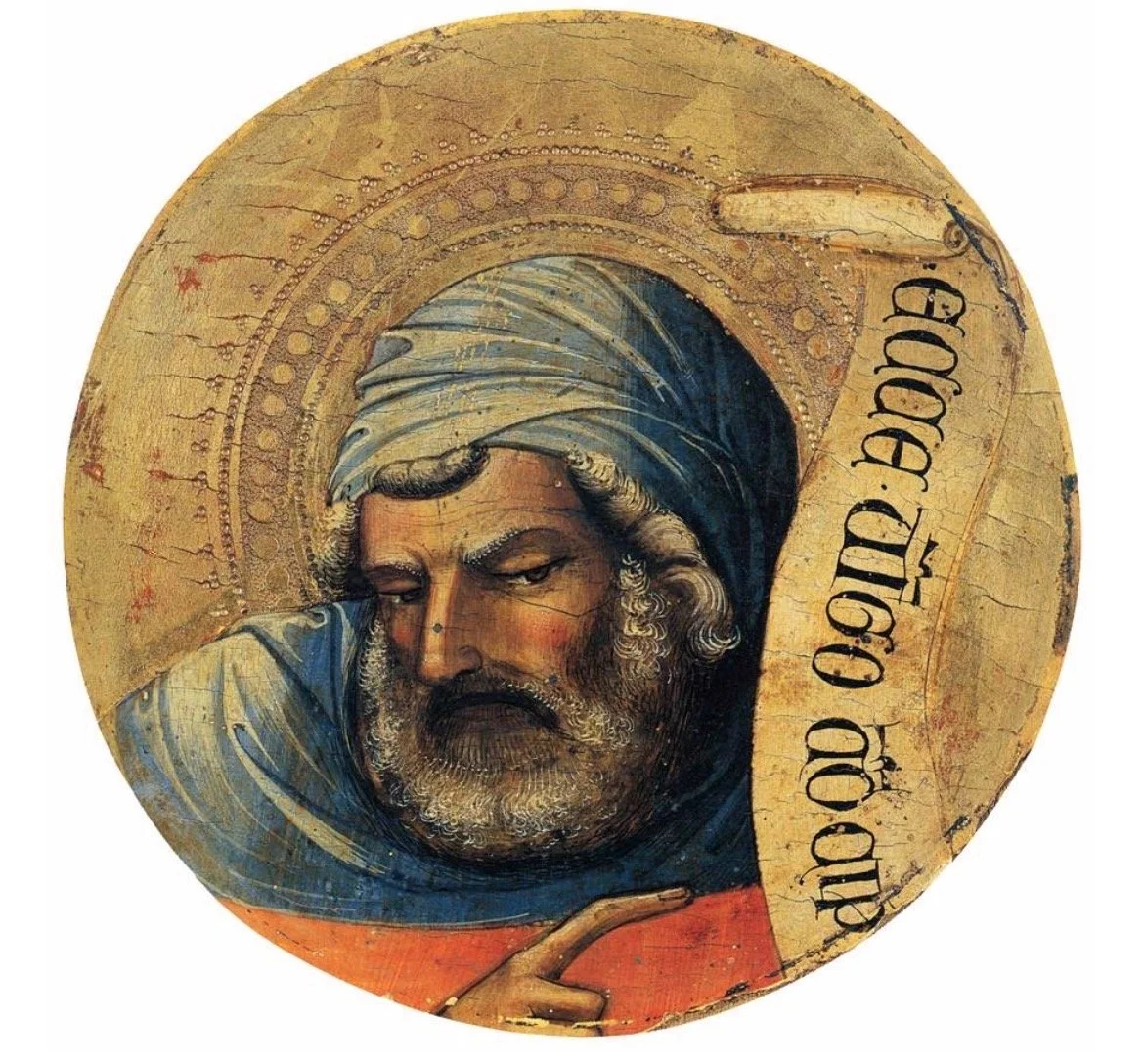
The Prophet Isaiah by Lorenzo Monaco, (tempera and gold, c.1405-1410)
Isaiah’s final prophesies were truly amazing. As Judah was descending to the point where God would “turn away for a while,” Isaiah gave truth after truth about things nobody could have imagined, let alone predicted! I encourage you to read this great synopsis from Dr. Ken Rathbun at Faith Baptist Seminary. He really gets the surrealness of the words God gave us through Isaiah to give insight into events that wouldn’t happen for more than a century:
Isaiah also told us that God would gather all nations, not just Israel, to be his, and gave us our anchoring prophesy about Christ’s sacrifice during this time. He also continued to double down on God’s judgment against the idolatry and wickedness of the ruling class in Jerusalem, and that wouldn’t end well for him.
Next week we will se the end of Hezekiah’s reign, and Menasseh will be the next king, and he proves to be one of the most wicked and idolatrous ever. This would mean the end of Isaiah, who consistently spoke truth to the powerful until the end.
Tradition holds that Isaiah was sawn in half by Menassah, and although that story is not in the Bible, it is present in both the Talmud and the extrabiblical Ascension of the Isaiah, so we presume it to be accurate. I believe that it is not included in Kings or Chronicles because God wanted us to focus on the amazing prophesies instead of the drama of Isaiah’s life with evil men.
Next week we read of the evilness of Menassah. God’s story, told in real time, shows Judah turning completely away from God after a brief period of success under a devout Hezekiah. This is the beginning of the end.
Year in the Bible Week 29
Week 29
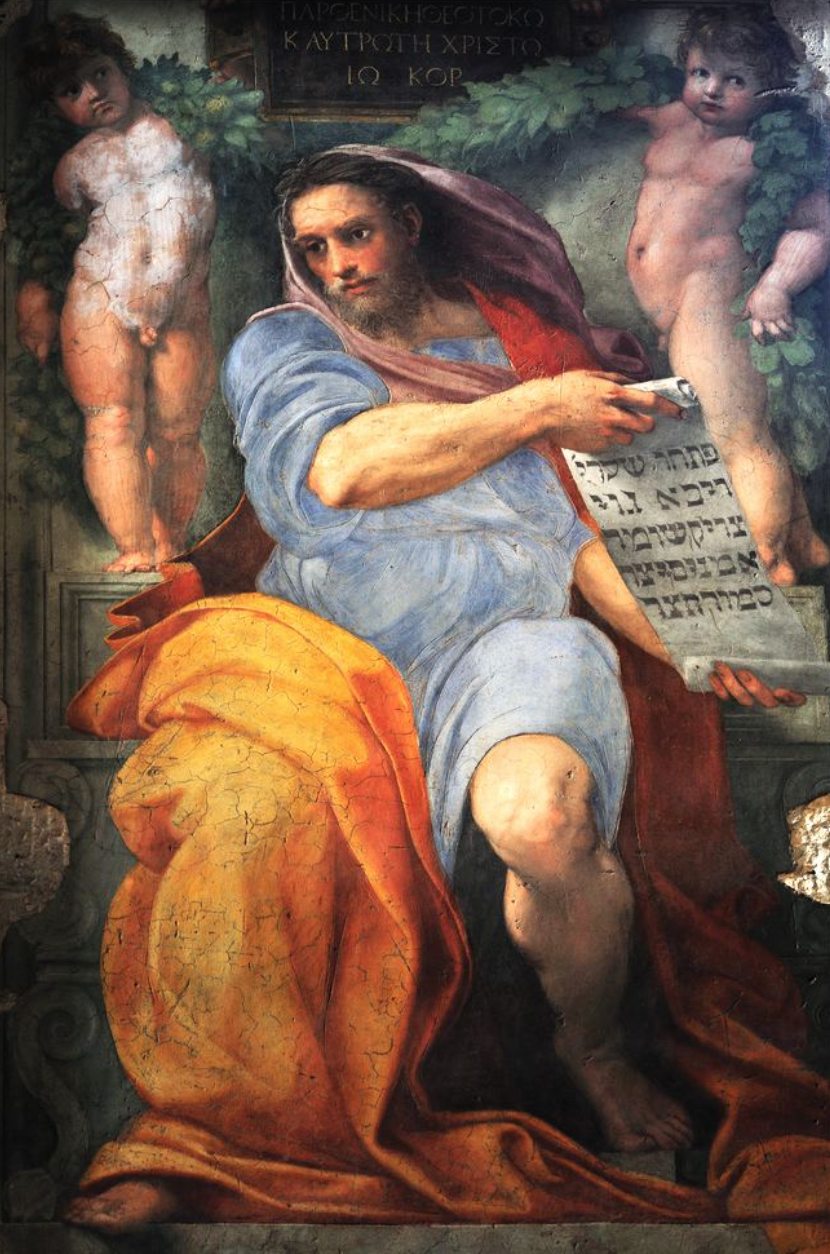
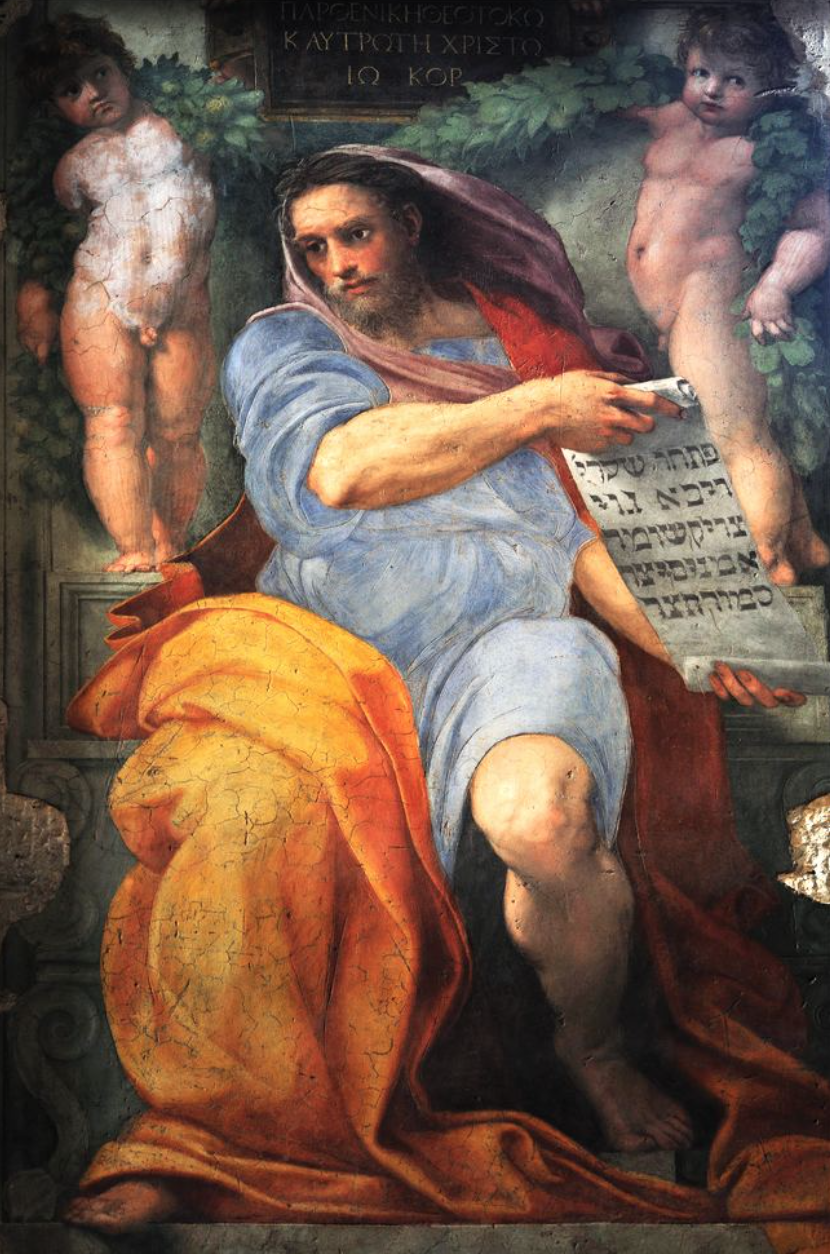
The Prophet Isaiah by Raphael, (1512) from the Basilica di Sant'Agostino in Rome. For a video of the fresco on site, visit: https://www.youtube.com/watch?v=_ySkoh4SZvU&t=10s
This week we’ve finished up Psalms, and are now back into Isaiah. The last few Psalms are a triumphant close to the book, and helps us be thankful for all of them. So what do we do with this collection to edify and encourage us in our walk with the Lord? It seems cliche to say that memorizing your favorite Psalms is “good for the soul,” but it really is! In my life, memorizing things has always been just a chore, and I never found joy in it, but memory exercises with God’s word fill me with joy. To memorize, I read words aloud into my phone, and then I listen passively as I walk or drive. After that, I start to say the words along with the recording. Before long I do it all on my own. Clearly I am an auditory learner, but whatever method works best for you, I encourage you to find joy in it!
Here’s a top ten list from the internet:
Psalm 23: “He makes me lie down in green pastures”
Psalm 121: “My help comes from the Lord”
Psalm 46: "Be still, and know that I am God"
Psalm 27: “Whom shall I fear?”
Psalm 51: “Create in me a pure heart”
Psalm 34: “I sought the Lord and he answered me”
Psalm 139: “Where can I go from your Spirit?”
Psalm 103: “Bless the Lord, O my soul”
Psalm 1: “like a tree planted by streams of water, which yields its fruit in season”
Psalm 100: “Enter his gates with thanksgiving; go into his courts with praise”
Here is part 2 of the Isaiah video. A great help!
This week we will be in Isaiah and Micah, and we will read about Hezekiah leading with faith in a very troubled time. We are almost to the prophesy of the suffering servant, and a reminder that the old entire testament points the way to Christ. Thank you Lord!
Year in the Bible Week 28
Week 28
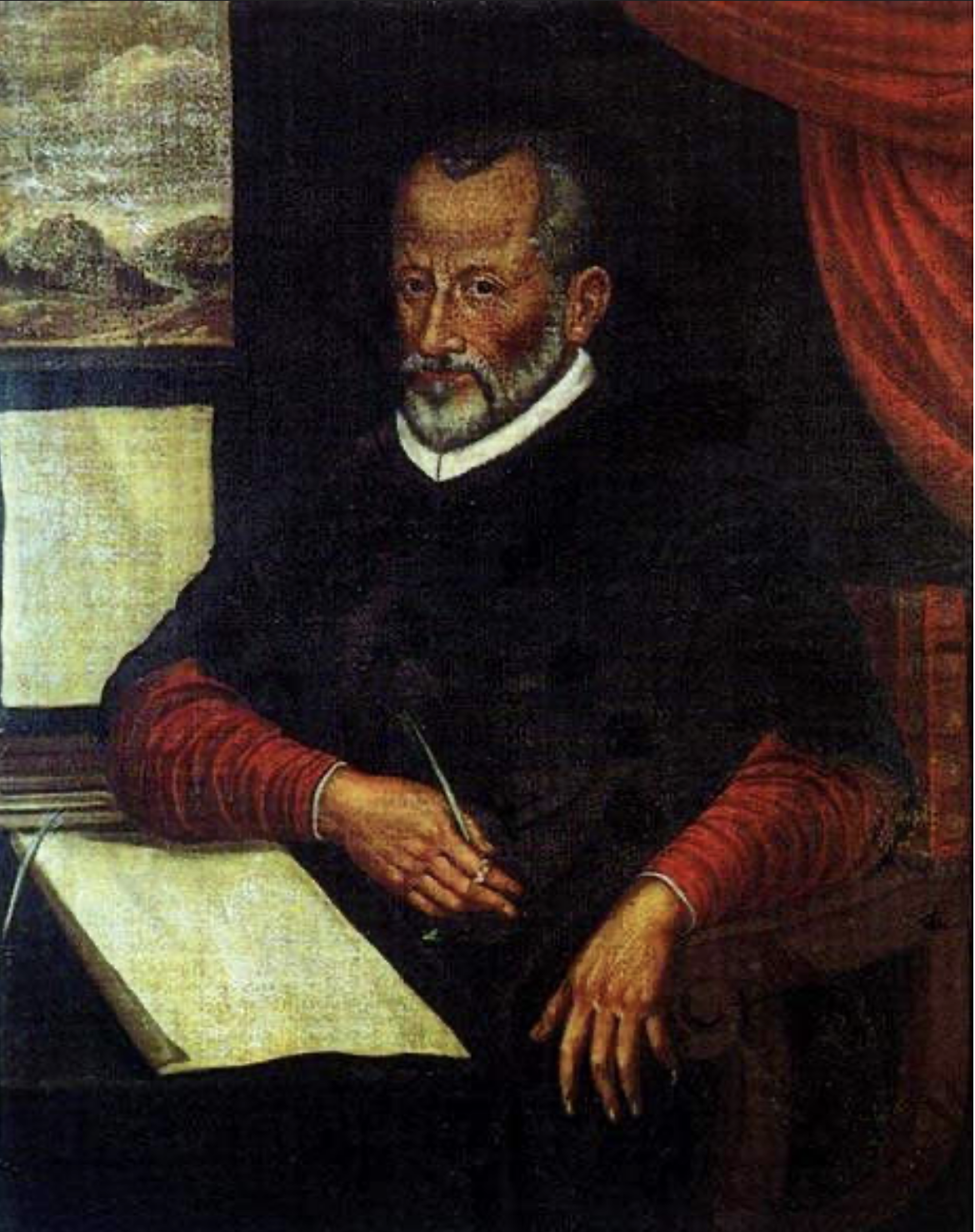
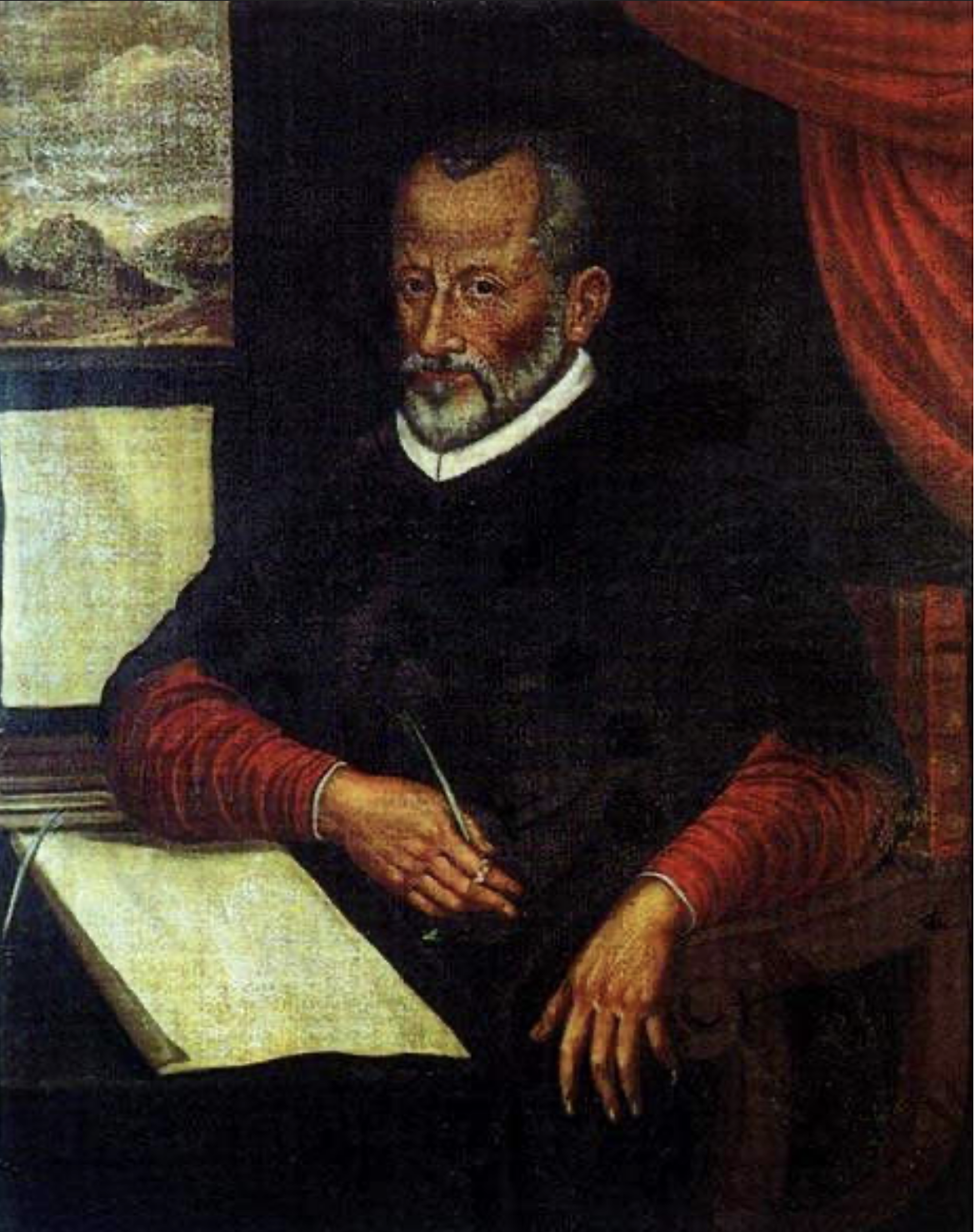
A Portrait of Composer of Sicut cervis, Giovanni Pierluigi da Palestina (1526-1594), whose treatment of Psalm 42 is legendary.
This week we read only from the Psalms, so let’s dig a little deeper into Psalm 42, which is a favorite of many.
There is much said in the bible about skilled musicians with their trumpets, lyres, harps, and other instruments, but it’s the human voice that makes the biggest musical impressions in God’s Word. The book of Psalms, essentially the nation of Israel’s songbook, is the largest book in the bible, and even though none of the original melodies have survived, now every modern generation gets an opportunity to bring new harmonic perspective to his unchanging word.
Lately in pop culture we have had a lot of modern worship artists offer treatments of Psalm 42, which offers rich words and images, deep emotion, and unshakable faith. Check out these:
“As the Deer” by Shane and Shane
City Alight - Psalm 42 (I Will Praise Him Again)
Keith and Kristyn Getty - Lord From Sorrows Deep I Call (Psalm 42)
When God inspires such a diverse group of people to tackle a similar scripture, I believe that the Holy Spirit is guiding us to rely on these passages, and use them to help us in the world.
Psalm 42 really brings the faithful together in these difficult days, but now let’s go back 450 years to a very different situation, and listen to one of the benchmark tone poems of the high renaissance, a motet by the Italian composer Giovanni Pierluigi da Palestrina that has truly withstood the test of time. The composer wrote six books of motets and dozens of madrigals during his lifetime, and his genius version of Psalm 42:1-3 was published posthumously in 1604. Sicut Cervis (Latin for “as the deer”) is still often used in Catholic liturgy, either as an Easter vigil or to celebrate at baptisms. Below is a video of the Choir of the Basilica doing it at a rehearsal in the National Shrine. I am a big fan of this medium-large choir with its 24 superb voices,. This size group adds weight to the beautiful controlled tonal dissonances in the piece, while bringing both sensitivity and momentum to every independent line. Special kudos to the sopranos in this chorus, who control phrasing very well in their upper registers, and do not distract from the tone poetry.
If you’d rather hear a more intimate version of this piece, I would suggest one of the 8-12 voice versions listed below:
Thanks for following me down this rabbit hole (or should I say, “deer trail”).
In this coming week we will read more amazing Psalms filled with faith, victory, and praise that has been reflected in worship for over 2500 years, with written melodies going back 1000 years, and sund recordings during the last 100 years or so.. At the end of next week we return to the book of Isaiah, and hopefully the songs we’ve sung here in midyear have given us the spiritual fortitude to endure what happens next in God’s beautiful love story to his people. Keep reading!
Year in the Bible Week 27
Week 27
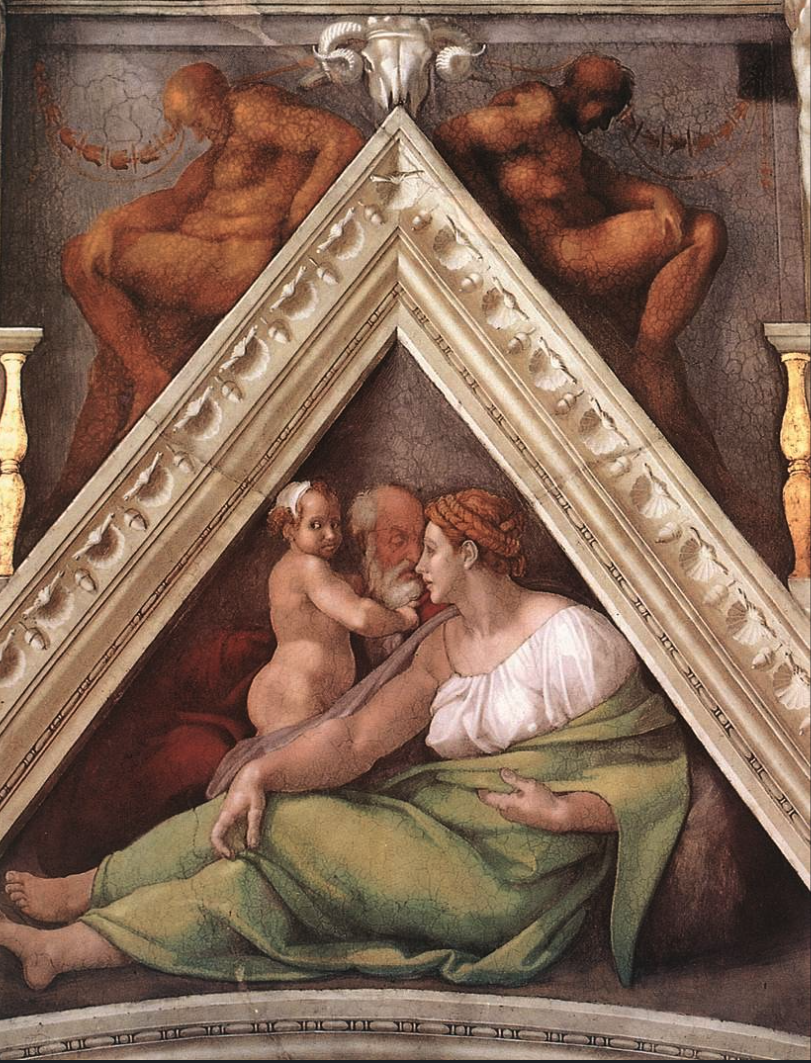
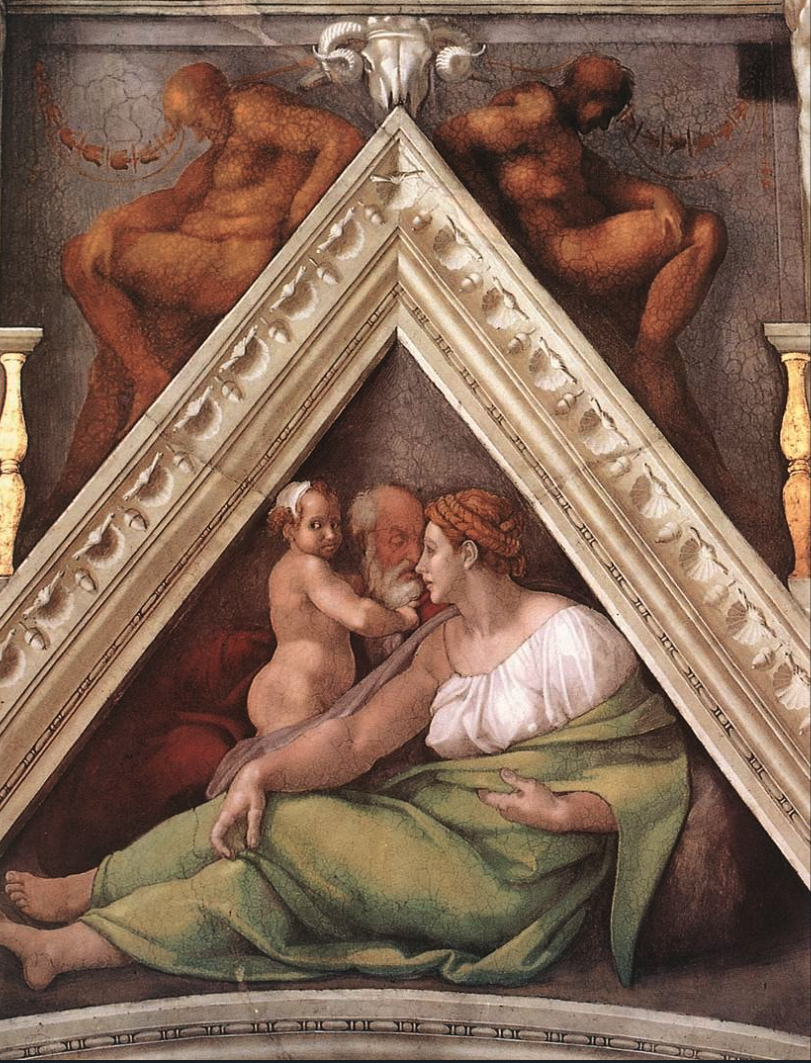
The Ancestors of Christ: Hezekiah by Michelango, in the Sistine Chapel c. 1509
This week we saw northern Israel’s defeat by the brutal Assyrians catrasted against the cleansing of the temple in Jerusalem by Judah’s king, Hezekiah, who gets hope and strength from the Lord. Just last week we were reading about Hezekiah’s own father, Ahaz, dismantling the temple and appeasing foreign people and their gods, and now his son is rededicating the temple to the Lord. Hezekiah did what was pleasing in God’s sight, and there would be success under his leadership, even as things deteriorate in the north. The bible makes it clear that the success came because God was with this king.
Of course, after this comes 55 years of Manasseh, and then this part of the story gets hard to read.
Through it all, Isaiah speaks God’s truth as one of the bible’s greatest prophets. He was set apart by God early in his life, and he unapologetically delivered God’s truth to Ahaz, Hezekiah, and Manasseh, who were all very different kings. Before we go much further in the story of Hezekiah, let’s look closer at the book of Isaiah. Check out the video below.
Look for part two of the Isaiah video next week. After this wonderful week of Psalms collected under Hezekiah, we will spend the rest of July reading about Judah’s tragic sin and decline, with Isaiah delivering eternal truth from God through it all.
Year in the Bible Week 26
Week 26
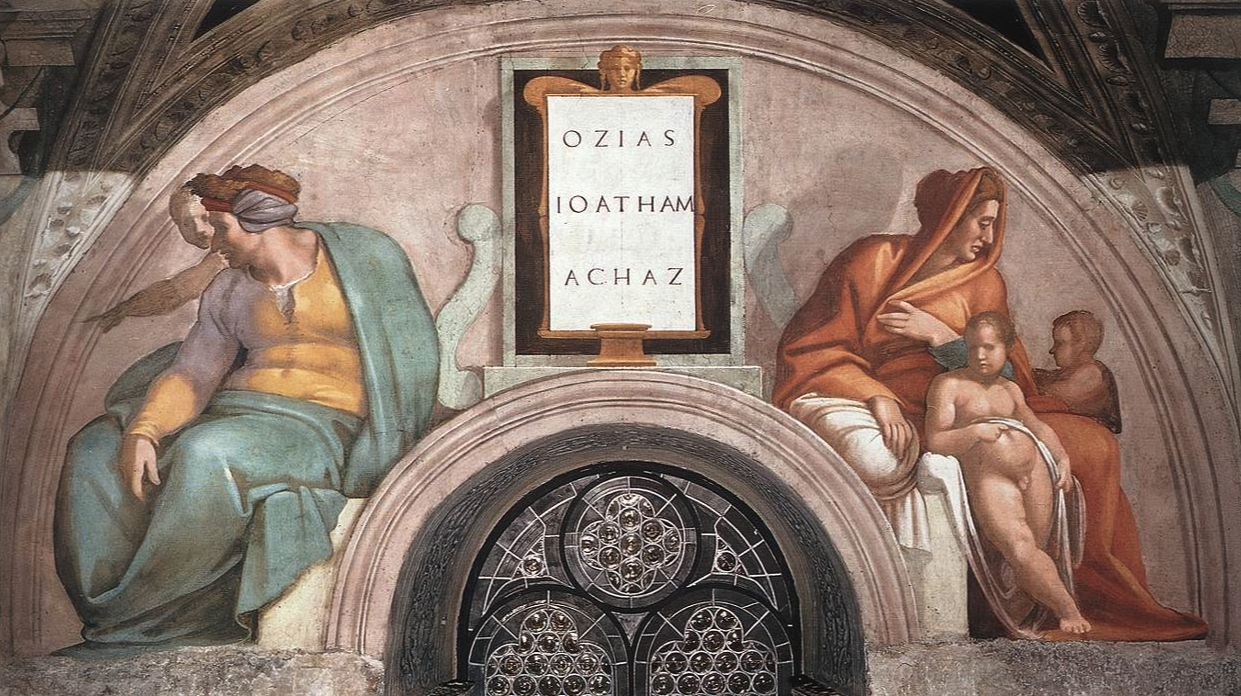
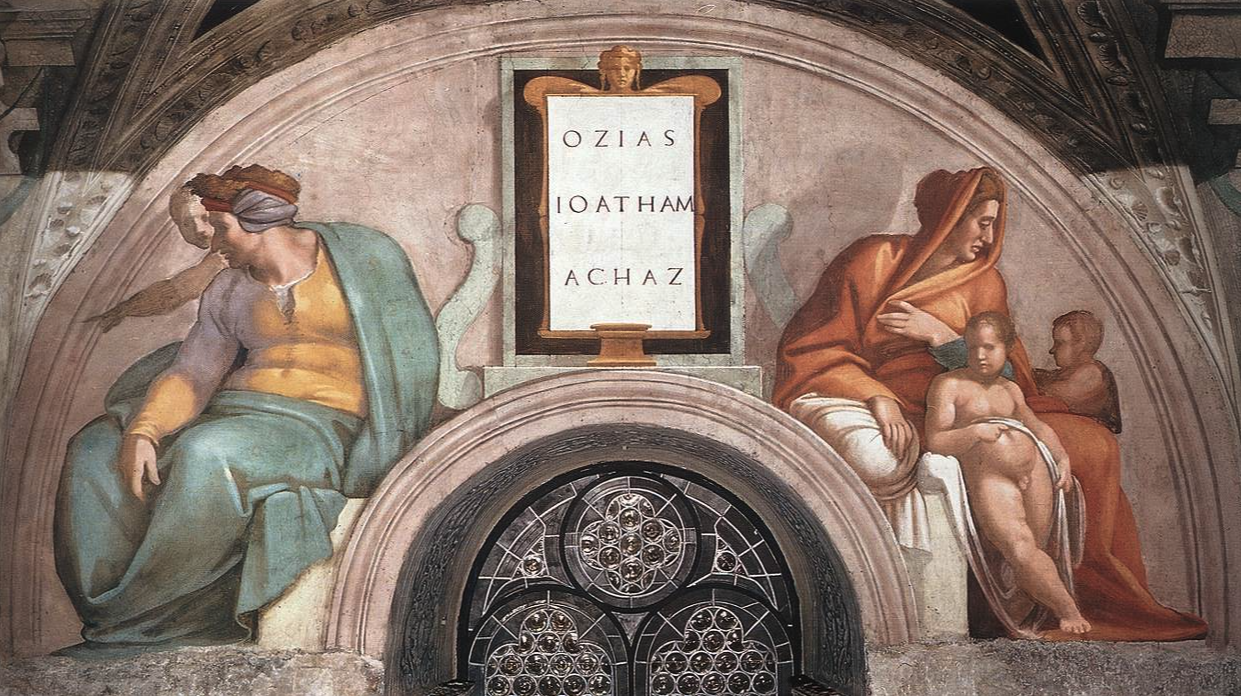
The Ancestors of Christ: Jotham, Ahaz by Michelango, in the Sistine Chapel c. 1512
This is week 26 of our Year in the Bible, so we are officially half done. Congratulations!
As we read about Ahaz dismantling the temple, he seems so far removed from God that we can forget how God is using him for divine purposes. As a descendant of David, he is an ancestor of Christ! We hope for more from him, but it doesn’t happen.
In Israel it is far worse, as they are turning further away from God, even denying him to other nations to gain favor. The prophets decry this abandonment and warn of coming disaster. In Hosea we read a terrific allegory, which is carefully and completely explained so that there is no question about meaning. Contrast this with Jesus and the woman at the well, where he, too, recounted the sins of Israel, but shrouded without full explanation. I wonder how many times God shows us allegorical imags today to guide us, and we miss them!
The book of Hosea has more to it than just the story and the warnings. There’s actually a lot of hope in it. The video below lays it out nicely, I think.
This coming week we get the contrast of Hezekiah leading in Jerusalem successfully, totally relying on God, while Samaria falls to Assyria with no help from above. Keep Reading!
Year in the Bible Week 25
Week 25
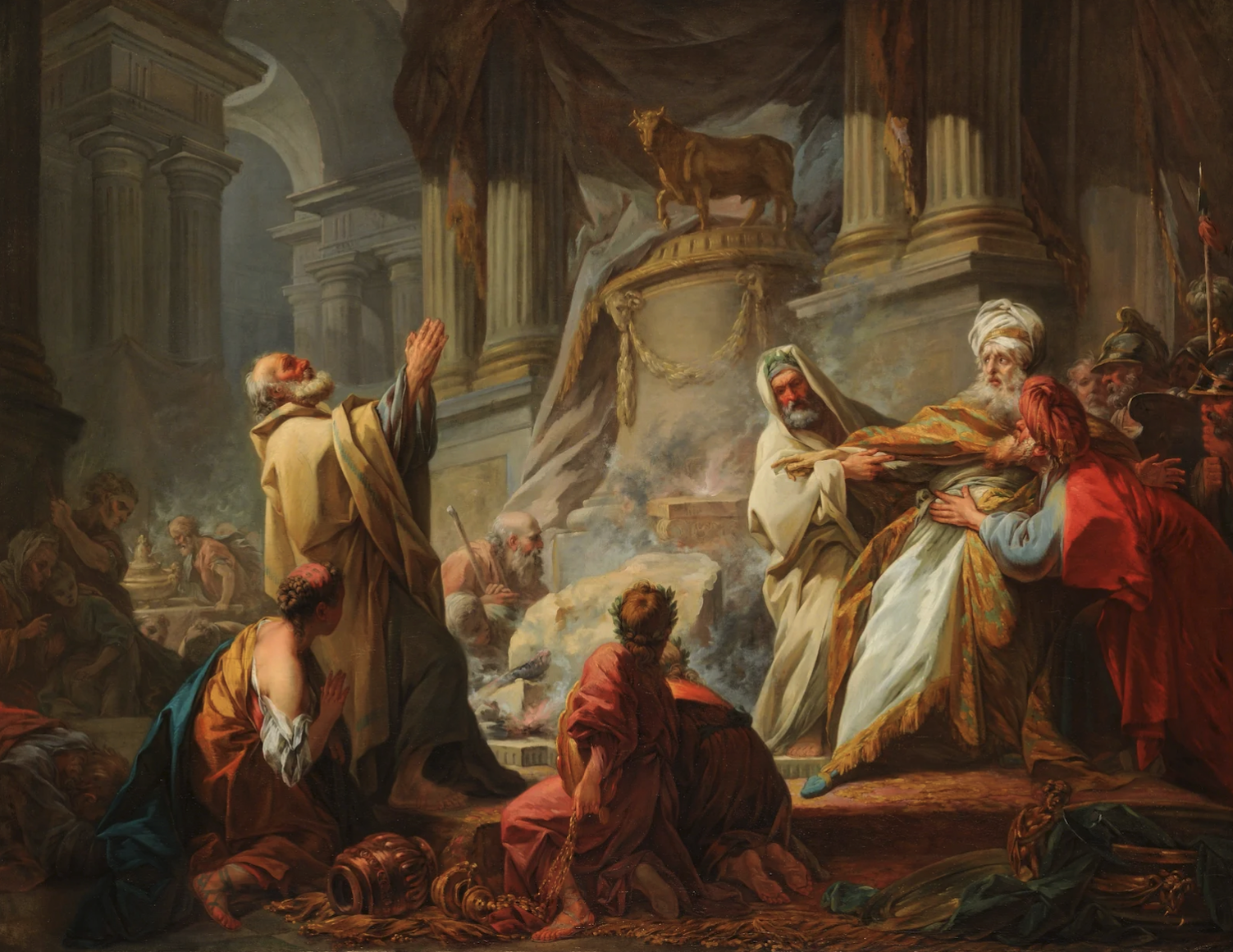
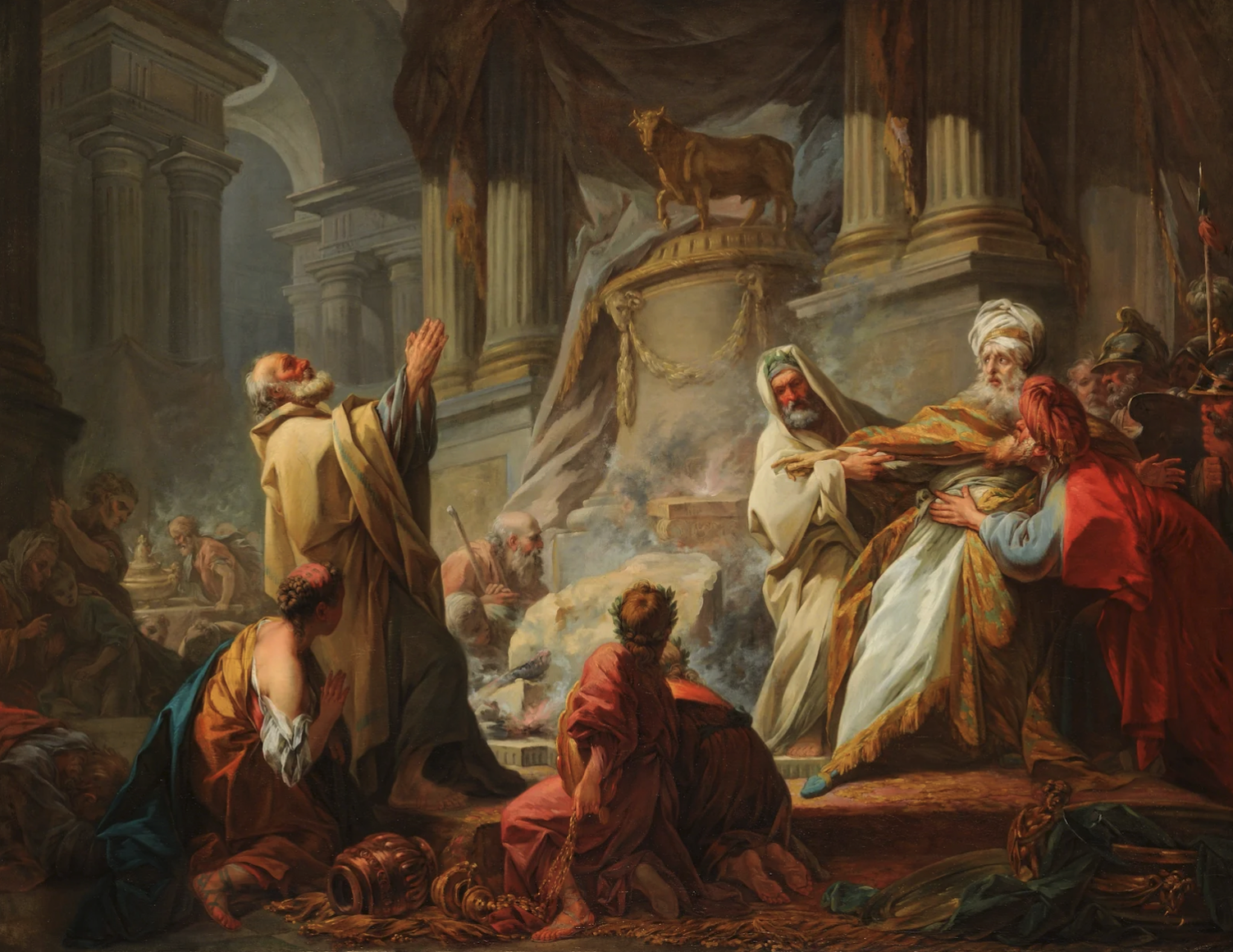
Jereboam Sacrificing to the Idols by Jean-Honoré Fragonard c. 1752
Jereboam sacrificed to idols so that they would help him. Then he would credit himself with victory, and say thank you to the idols he made. Meanwhile, the real God was simply letting Jereboam be a puppet, setting up all the pieces. Disaster would soon come, and there would be no question that God held sovereign power the whole time. That’s how you turn a nation back to you, and discipline those whom you love.
Sharing a personal story this week, so I hope you’ll indulge me.
Last weekend I was in the hospital to do a medication change, and my favorite nurse was a young lady with tattoos and piercings, with indomitable spirit and energy. I’ll call her “Lauren,” because her name is actually Lauren… When my blood pressure came up as 111/68 on one of the six daily checks, she smiled broadly and said, “oooh, angel numbers!” Clearly, numerology was part of her lifetsyle. Instantly, she looked at me and she got shy. She had remembered everything I had been saying about God and miracles for the past day and a half, and she recognized that her numerology was not part of my belief system, and I couldn’t possibly share whatever it was she was experiencing. All of this happened in half of a second.
Lauren glanced over, embarrassed, and said, “I know you don’t believe in this stuff.” She looked to me for a response.
In those moments a choice happens. You can choose the relationship over your profession of faith, or you can choose your faith over the development of relationship. However, in these (post)modern times there is a third option that many of us are choosing. Basically you say “let’s have a truce, where neither of us presents their beliefs as a weapon.” That’s basically what I did.
“Well, whatever makes you happy.” was my response. I didn’t call out the lie in that moment. It just didn’t seem like the right thing to do. In my thinking, she already had acknowledged that I was a strong believer, and that she was doing things that denied my faith. Instead of “going in for the kill,” pushing the truth into the moment, I tried to show compassion, respect, and care. If you’ve known me a while, you know this is something I’m not used to doing. I have never been afraid to speak truth into tough situations, and I have suffered steep relational consequences over the years. Recently, God has given me the opportunity to share my faith with lot’s of people who do not believe, and in this case Lauren understood who I was, and what I believed, and it made her question her own idolatry. Mission accomplished.
My gratitude for my salvation has changed the way I talk to people. instead of pushing hard facts and debating people’s perceptions, I show them a changed life and let them start asking questions. They say that’s the best kind of evangelism, and I hope they’re right.
I’ll leave the video up for Kings for another week because things are getting really intense, and it’s good to have a program to keep track of the big picture. In this coming week we will hear a lot from prophets, especially Amos, and God’s harsh plans will be revealed.
Remember, the timeline is going very slowly now, so be patient, and settle into this moment. Israel is about to fall to the Assyrians, and it’s important to get the full picture. Above all, keep reading!
Year in the Bible Week 24
Week 24
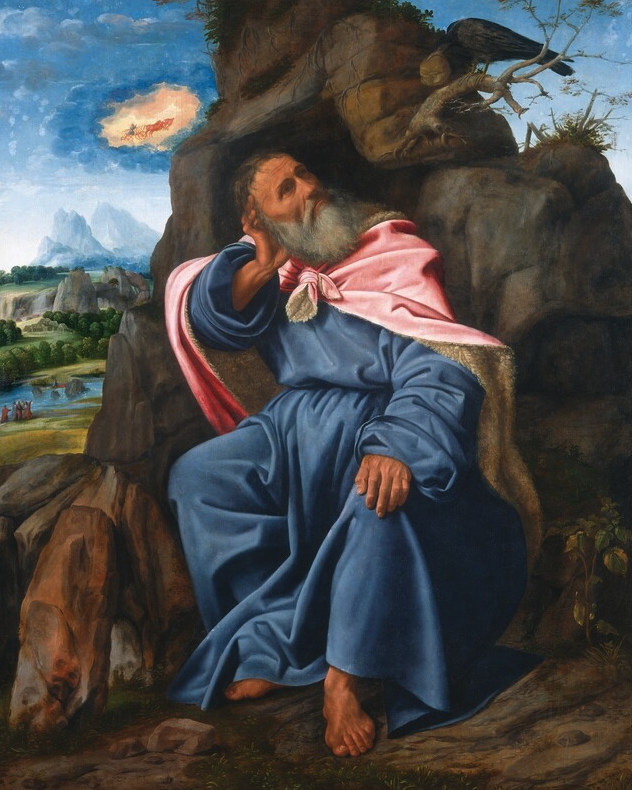
Elijah Fed By Ravens by Giovanni Girolamo Savolda c. 1510
Sorry, this week’s post, a lovely treatise about Ahab, Jezebel, and how hard it is to be a prophet, was accidentally deleted.
Year in the Bible Week 23
Week 23
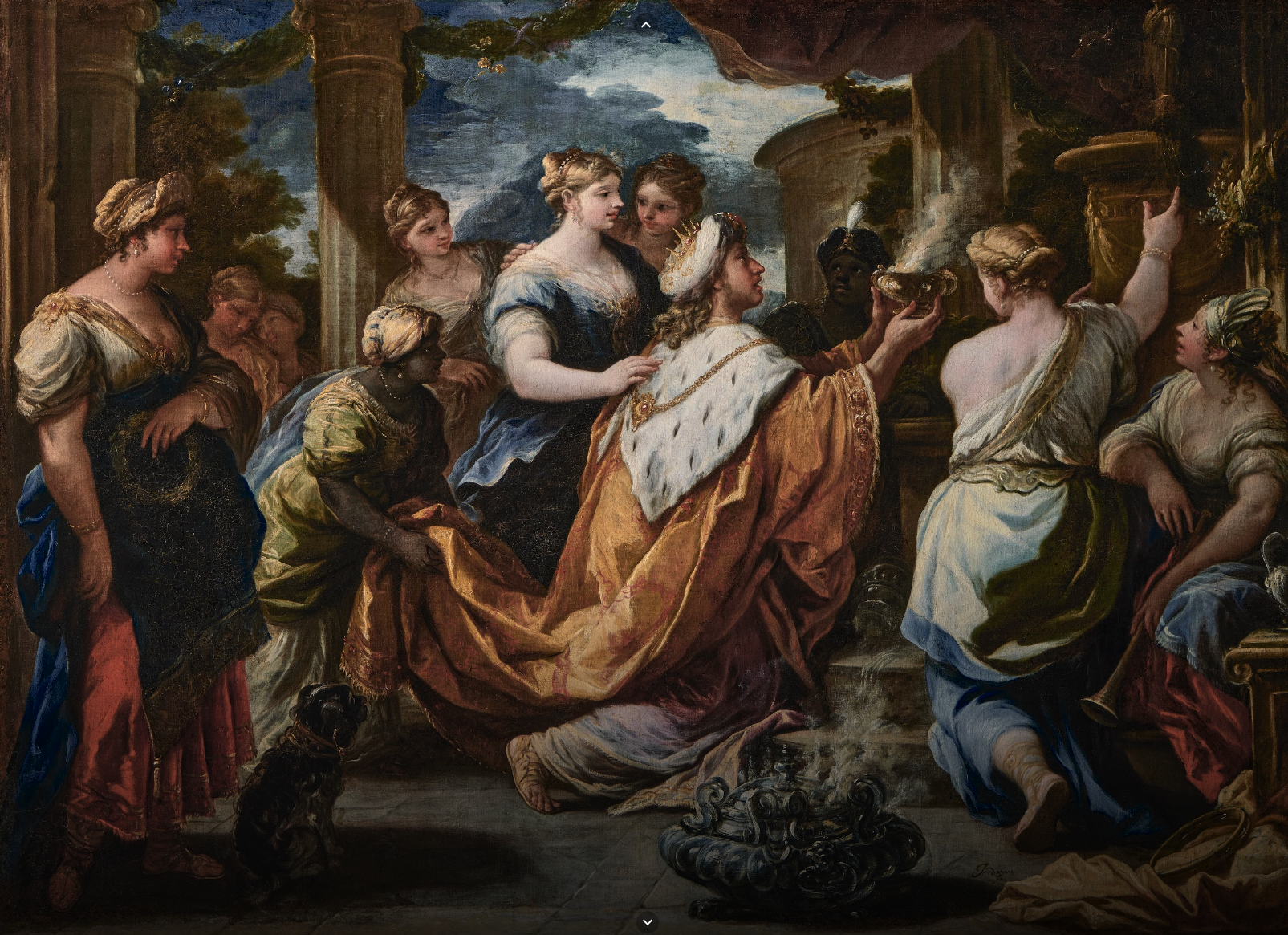
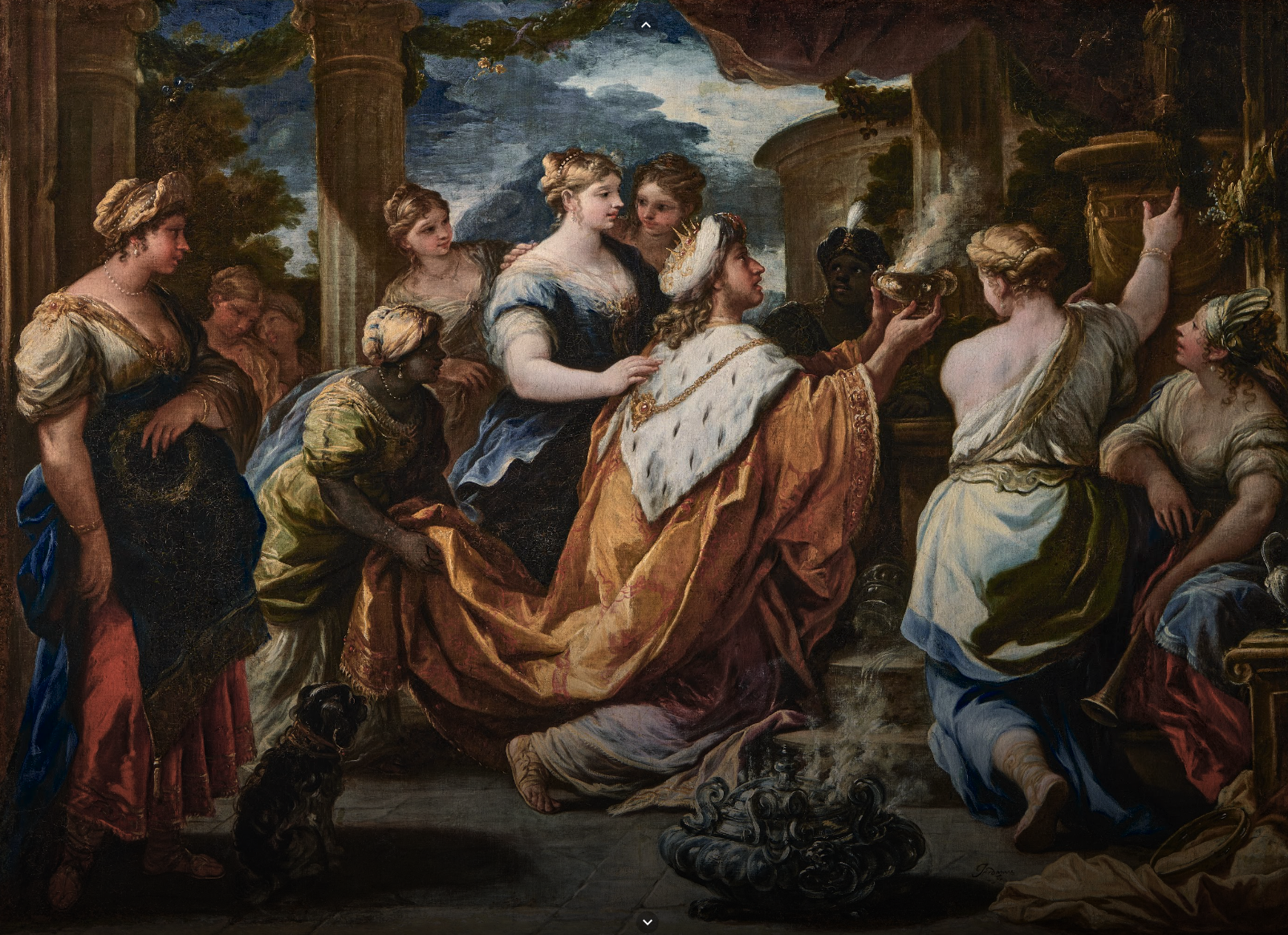
Solomon Wirshipping Idols by Luca Giordano (1634-1705)
This week’s readings turn the story of Israel completely upside down. First we get the words of Solomon the wise in Proverbs, then we watch as Solomon violates commandment number one, and then suddenly we read about the meaninglessness of it all. Without repentance and submission, without the will of God reigning supreme over our own plans and desires, life is tragic indeed, and such is the aim of Ecclesiastes.
Very often I am guilty of reading God’s word in the Old Testament as God’s instructions and interactions with the entirety of His chosen people, but Ecclesiastes brings me back to the truth of God’’s living word, that all of it is useful for teaching, rebuking, correcting and training in righteousness (2 Tim 3:16). God’s righteousness is always the same. Only our distance from it changes. It is good to enjoy the simple pleasures given to us if we are in his will, but if we aren’t in his will it is all meaningless.
Next week we will see the passing of Solomon, and the beginning of Israel’s terrible troubles. We will begin a series of unfit kings and usurpers who do evil in the Lord’s sight, and reduce the nation incrementally. God could turn it around, but with only a few exceptions they do not turn to Him. Without God’s blessing, the nation will not prosper. It will barely endure.
Year in the Bible Week 22
Week 22
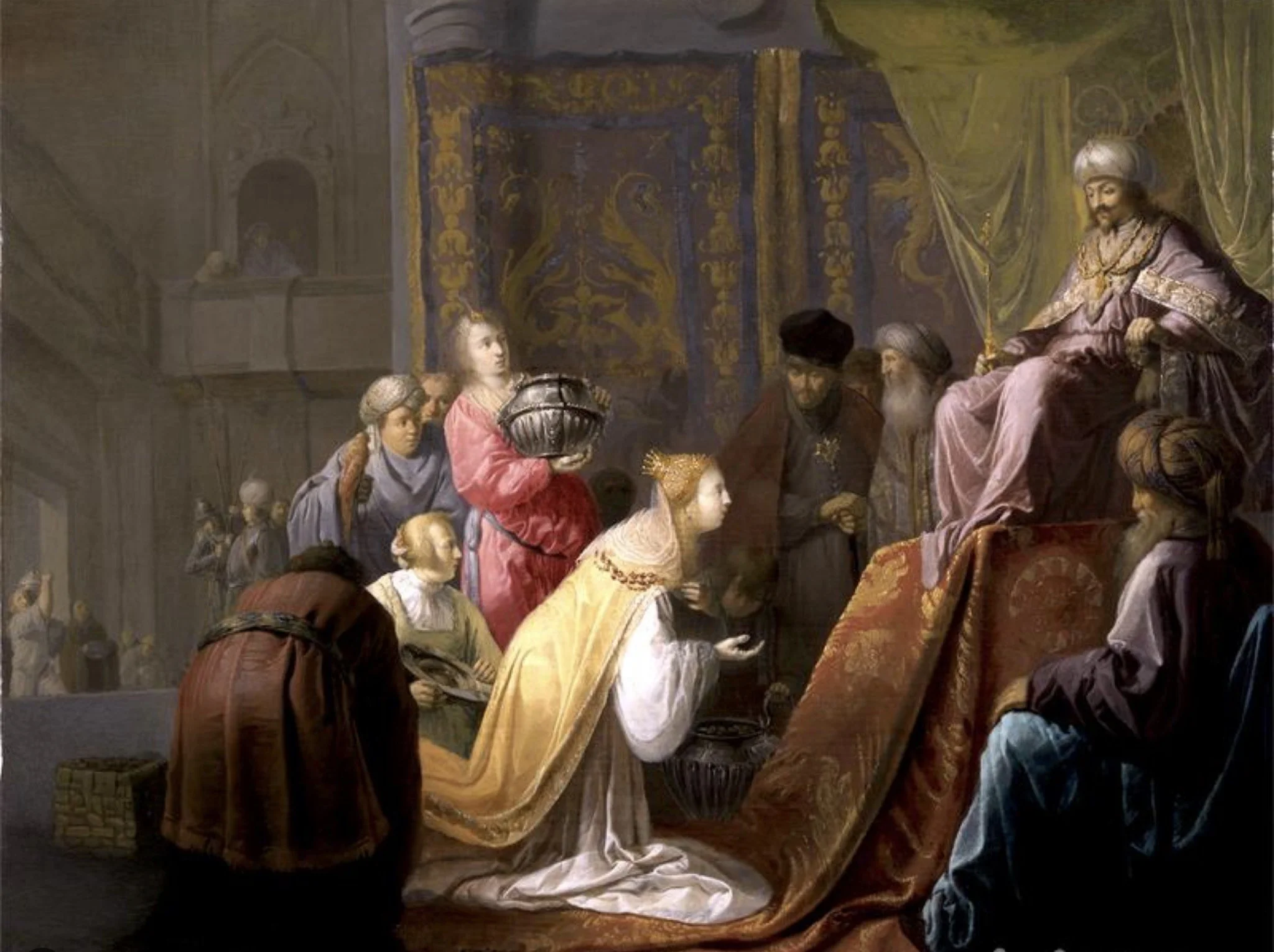
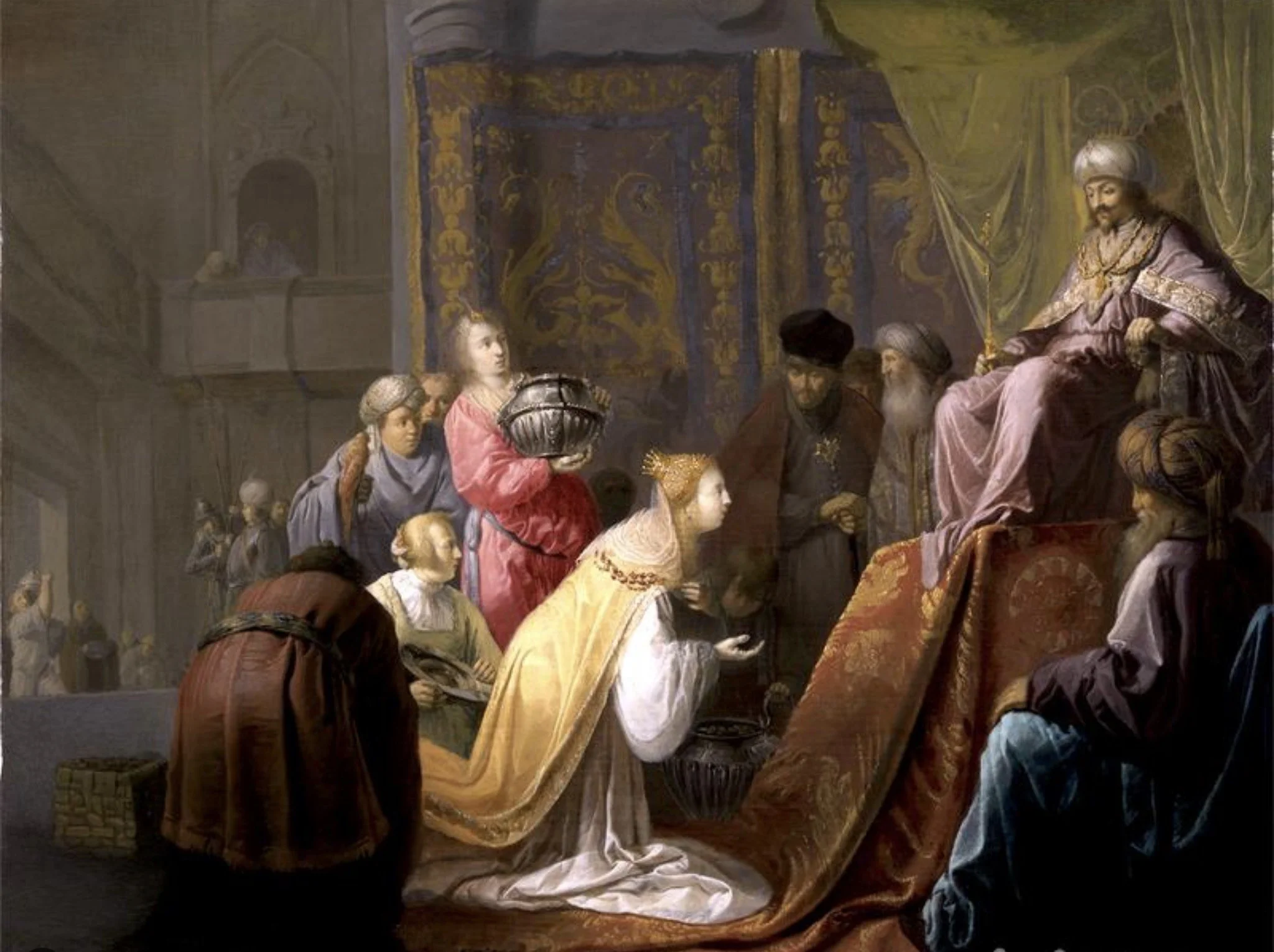
The Queen of Sheba Before King Solomon by Willem de Poorter (c. 1630)
King Solomon has always been associated with great wealth and wisdom, so we might incorrectly assume that his story is all milk and honey. Sure, he built magnificent monuments, but even though he was rich, wise and well-regarded, he faced a struggle that may have been even harder than that of his father, King David.
Solomon’s father was (perhaps embarrassingly) humble before the Lord, whether he sinned or not. He definitely sinned, but then repented early and honestly. In Solomon we see someone who was nearly immediately lifted high on a pedestal, with everyone following him. He had wise counselors, but none would be able to influence Solomon’s choices the way Nathan could influence David’s. Proverbs shows how he must have felt not only the responsibility to lead and guide, but also the power to do it himself, becoming prophet and teacher to the nation. Surely God spoke truth through Solomon in Proverbs, but it’s hard to read these truths without a grim foreshadowing of the pain of Ecclesiastes. Proverbs is written from an empowered perspective that is utterly absent in Ecclesiastes, and that had to be really hard on Solomon. Thankfully he knew where his strength could come from.
BibleProject has a terrific overview video for Proverbs, annd I’d like to share it now instead of waiting until next week. This has great insight and perspective!
This week we will continue the book of Proverbs, and I’d love to know which ones apply to your life now, or any that have helped and guided you. We will also see the beautiful Song of Solomon this week. If you’re falling behind, I’ll remind you that it can be easy to catch up using the audio version. Just let me know if you need any help!
Year in the Bible Week 21
Week 21
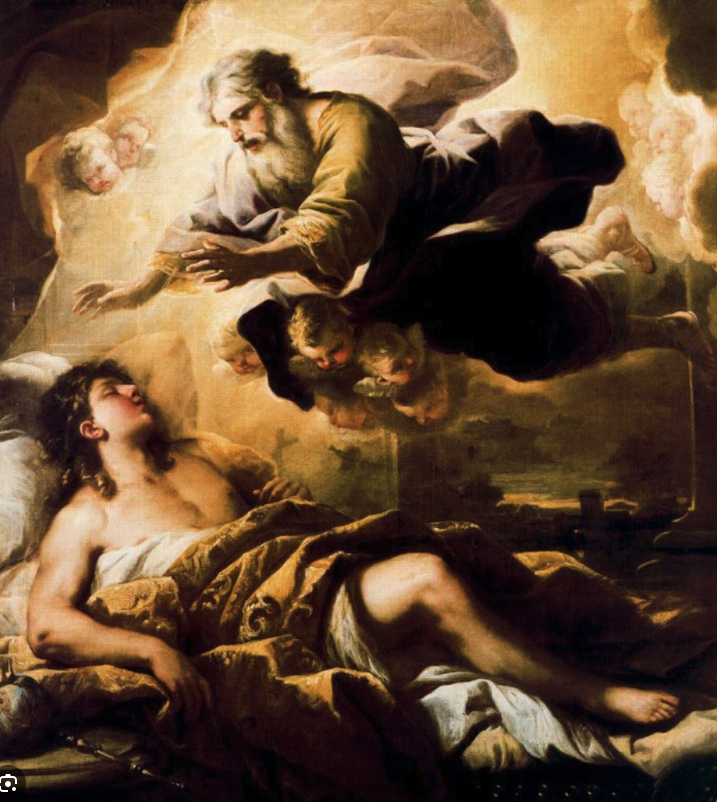
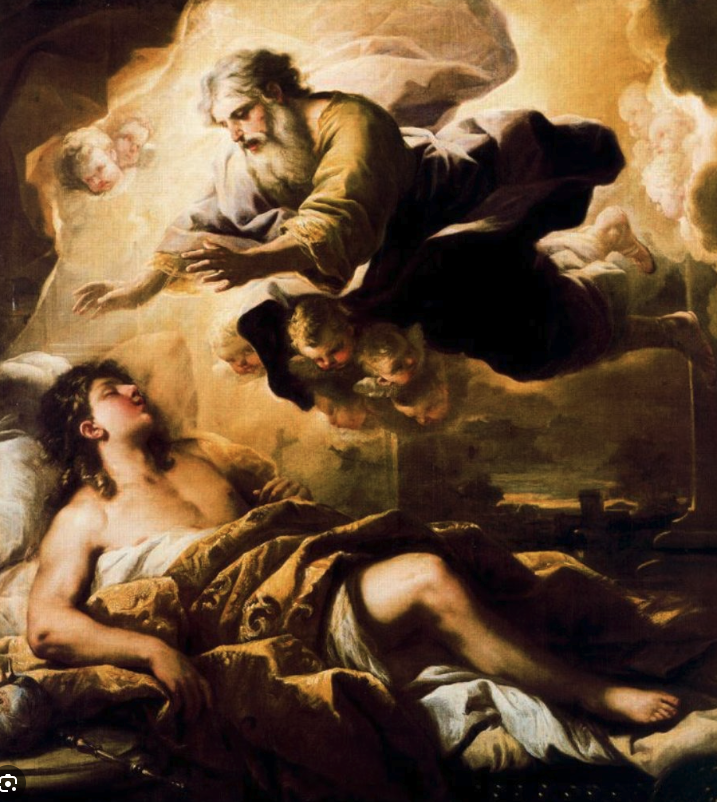
Solomon’s Wisdom in a Dream by Luca Giordano (1693-1695)
This week we finished psalms of David, Asaph, and others in the time of David’s reign, and then we moved on to the beginning of Solomon’s time on the throne. The early days of Solomon included a consolidation of power, the death of Solomon’s brother, and the killing of Joab in a very holy place. I had to look up how it was possible forJoab to be killed in tabernacle, and the answer was in Exodus 24:14 and Numbers 35:31-33. Unrepentant murderers are not given sanctuary, and they can be dragged from the altar and killed. Brutal, but legal.
Solomon made treaties with other nations, and the Israel was at the height of prosperity and influence during this time.
The temple and palace, as described in the Bible, were almost too fabulous to be true. You might have noticed that the capacity of the Sea was different in the Kings account versus the Chronicles. Looking it up, we see a few possible explanations: The most popular explanation is that one indicates total volume, and one indicates usable volume.
1 Kings 7:26: Notes it "held" (contained) 2,000 baths.
2 Chronicles 4:5: Uses language indicating it "received and held" (could contain) 3,000 baths
There are a few other possible explanations for the difference, so make sure you ask about it when you get to heaven! Also, it looks like one “bath” measurement is five gallons of water. That would be a pretty small bathtub!
This coming week we will get the glorious story of the ark brought to the temple and its dedication, and we will finish the week in Proverbs. Proverbs is a treaure trove of memory verses and tidbits of wisdom for living. Text me or email me your favorite proverbs and I’ll try to include them next week!

Year in the Bible Week 20
Week 20

10,000 Reasons by Matt Redman
This is our second week of psalms written by David, and by those who led music under his reign. Next week we will start to read about Solomon, the temple, and the wealthy and wise king. We will also read more about the dangers of choosing our own will versus God’s will, and we will gain wisdom, both by Solomon’s instruction, and by his example, good and bad.
This week, let’s look one more time at how one of the psalms of David inspired a classic worship song. These songs go back to Martin Luther and further, but I respectfully submit that in all generations, God’s creative servants have strived to present his timeless word to his people in a relevant and compelling way. The classic, enduring songs that fit not only the times they were written in, but the timeless truth they are written from. I believe “10,000 Reasons” is one of those songs.
It’s easy to imagine Matt Redman and Jonas Myrin reading the psalm, uncovering “Bless the Lord, O My Soul” as the anchor, and then praying for connection and guidance as they crafted this song. There have been many renditions of Psalm 103 throughout history, but a few have been blessed to endure, and some even work by God’s grace to reach a wide audience condidtenly, and encourageGod’s people generation to generation. Remember this when we dive deeper into Psalms in a few weeks. For anyone who listens, the Holy Spirit will bring the right word, the right music, and the right platform.
No matter what you do, pray for inspiration from the Bible. His word will never fail. (that’s another song).
Year in the Bible Week 19
Week 19

The Lord is my Shepherd by Keith and Kristyn Getty
While we read David’s words in the Book of Psalms I’ll be posting some music inspired by the psalms. If you have a favorite, please text me! We will get back to the masters of renaissance art shortly.
While we explore the David’s lyrics, let’s take a moment to reflect on the volumes of music it has inspired through the ages. There were sung prayers and chants 1500 years ago, church music through the middle ages, and classic compositions that have become standard hymns. The church today sings protestant hymns based on psalms all the time, and even now we see a constant stream of new music from this timeless well of musical praise and prayer.
David’s psalms in particular express his relationship with God better than any altar, temple, or sacrifice can. All are very important, and are prescribed by God as appropriate ways to worship, but only music brings the individual love and longings of people together into one multidimensional tapestry for God’s ears to hear, and that’s a pleasing aroma to him!
When we sing together, even at our best, we would be barely tolerable compared to the perfection of heaven. Thankfully, God hears more than out-of-tune people who sometimes for get the words. He hears every heart focusing on him, in the same moment, multiplying the factors of everyone’s individual experience with all the ways he has been present to us. God is the only one who hears our worship music in that way, and in his word he says how much he loves it!