

Year in the Bible Week 24
Week 24
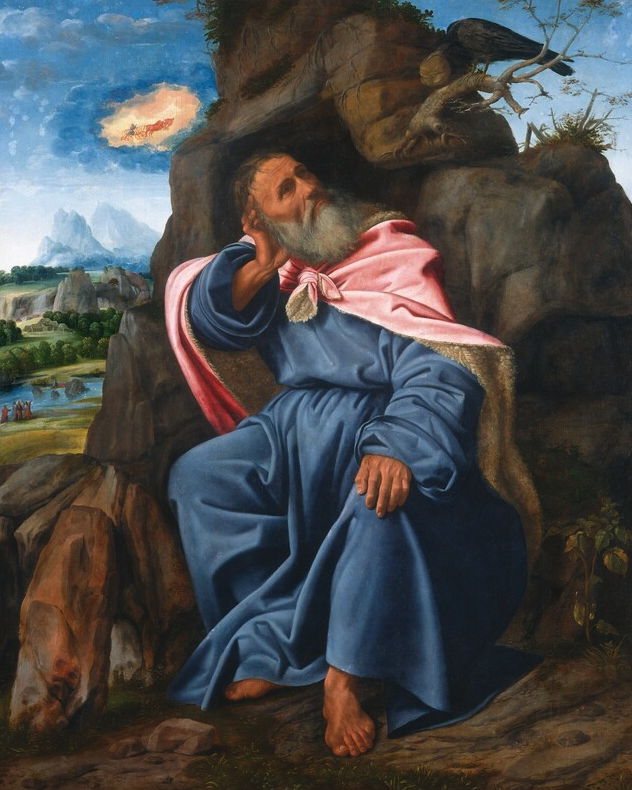
Elijah Fed By Ravens by Giovanni Girolamo Savolda c. 1510
Sorry, this week’s post, a lovely treatise about Ahab, Jezebel, and how hard it is to be a prophet, was accidentally deleted.

Year in the Bible Week 23
Week 23
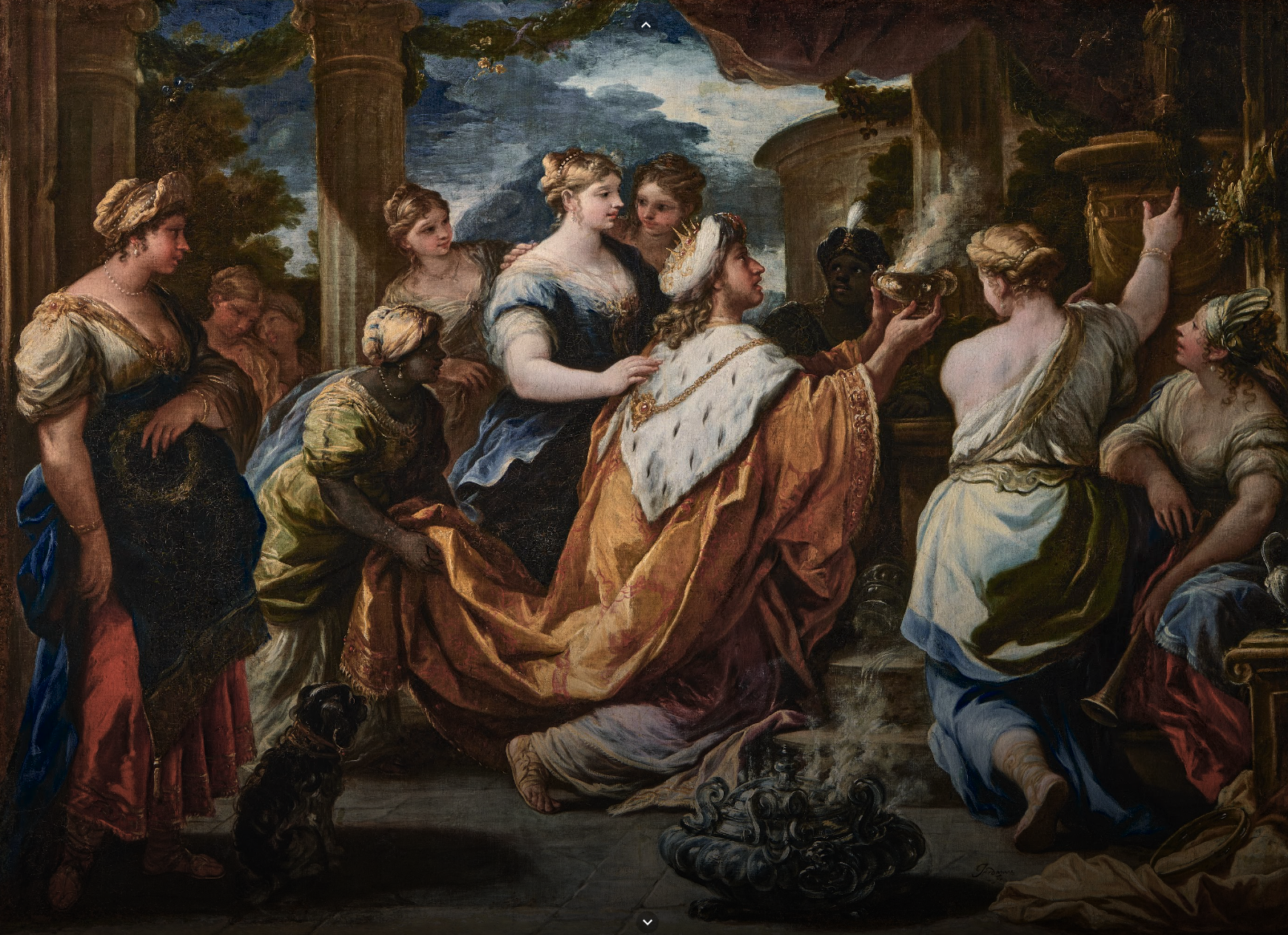
Solomon Wirshipping Idols by Luca Giordano (1634-1705)
This week’s readings turn the story of Israel completely upside down. First we get the words of Solomon the wise in Proverbs, then we watch as Solomon violates commandment number one, and then suddenly we read about the meaninglessness of it all. Without repentance and submission, without the will of God reigning supreme over our own plans and desires, life is tragic indeed, and such is the aim of Ecclesiastes.
Very often I am guilty of reading God’s word in the Old Testament as God’s instructions and interactions with the entirety of His chosen people, but Ecclesiastes brings me back to the truth of God’’s living word, that all of it is useful for teaching, rebuking, correcting and training in righteousness (2 Tim 3:16). God’s righteousness is always the same. Only our distance from it changes. It is good to enjoy the simple pleasures given to us if we are in his will, but if we aren’t in his will it is all meaningless.
Next week we will see the passing of Solomon, and the beginning of Israel’s terrible troubles. We will begin a series of unfit kings and usurpers who do evil in the Lord’s sight, and reduce the nation incrementally. God could turn it around, but with only a few exceptions they do not turn to Him. Without God’s blessing, the nation will not prosper. It will barely endure.

Year in the Bible Week 22
Week 22
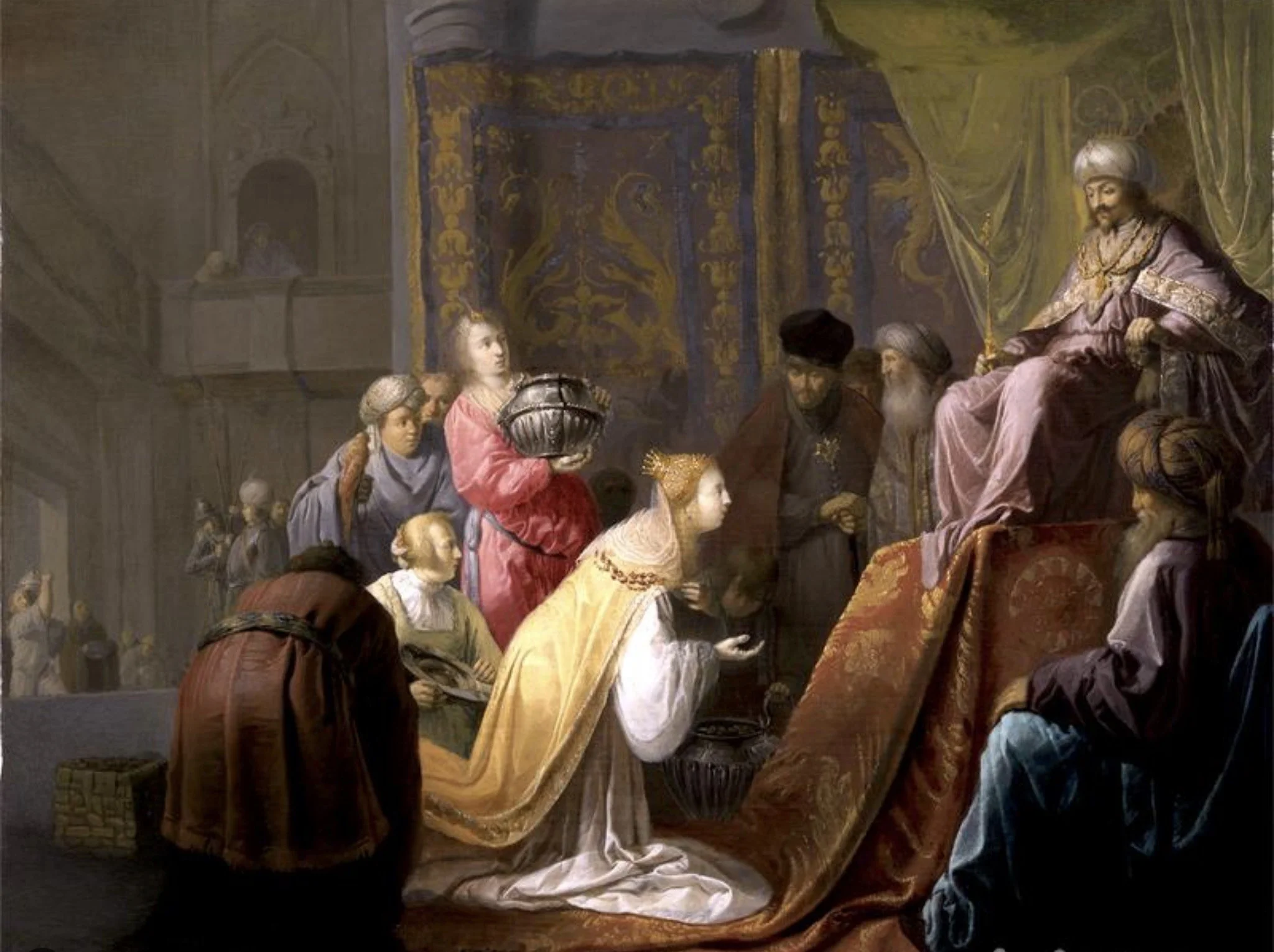
The Queen of Sheba Before King Solomon by Willem de Poorter (c. 1630)
King Solomon has always been associated with great wealth and wisdom, so we might incorrectly assume that his story is all milk and honey. Sure, he built magnificent monuments, but even though he was rich, wise and well-regarded, he faced a struggle that may have been even harder than that of his father, King David.
Solomon’s father was (perhaps embarrassingly) humble before the Lord, whether he sinned or not. He definitely sinned, but then repented early and honestly. In Solomon we see someone who was nearly immediately lifted high on a pedestal, with everyone following him. He had wise counselors, but none would be able to influence Solomon’s choices the way Nathan could influence David’s. Proverbs shows how he must have felt not only the responsibility to lead and guide, but also the power to do it himself, becoming prophet and teacher to the nation. Surely God spoke truth through Solomon in Proverbs, but it’s hard to read these truths without a grim foreshadowing of the pain of Ecclesiastes. Proverbs is written from an empowered perspective that is utterly absent in Ecclesiastes, and that had to be really hard on Solomon. Thankfully he knew where his strength could come from.
BibleProject has a terrific overview video for Proverbs, annd I’d like to share it now instead of waiting until next week. This has great insight and perspective!
This week we will continue the book of Proverbs, and I’d love to know which ones apply to your life now, or any that have helped and guided you. We will also see the beautiful Song of Solomon this week. If you’re falling behind, I’ll remind you that it can be easy to catch up using the audio version. Just let me know if you need any help!

Year in the Bible Week 21
Week 21
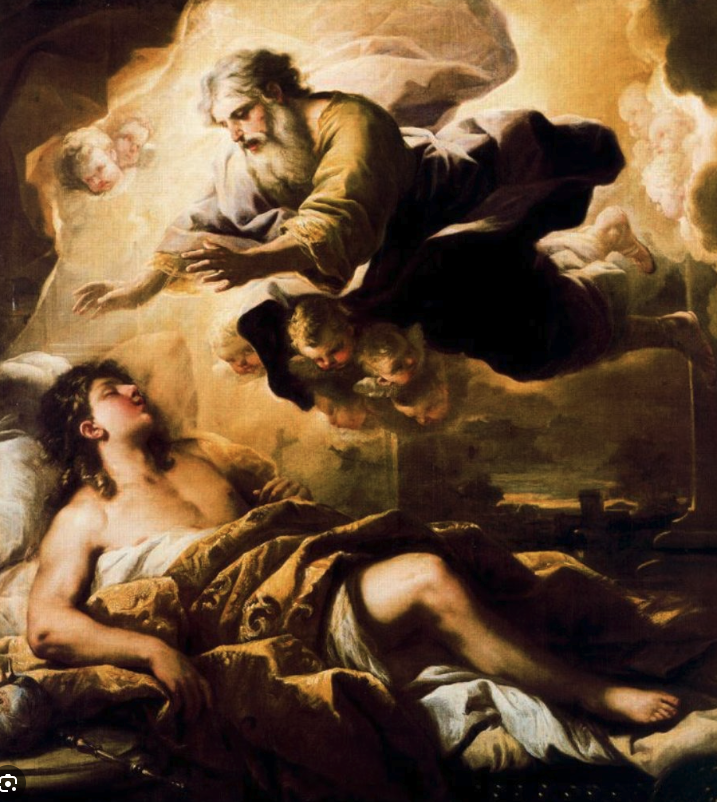
Solomon’s Wisdom in a Dream by Luca Giordano (1693-1695)
This week we finished psalms of David, Asaph, and others in the time of David’s reign, and then we moved on to the beginning of Solomon’s time on the throne. The early days of Solomon included a consolidation of power, the death of Solomon’s brother, and the killing of Joab in a very holy place. I had to look up how it was possible forJoab to be killed in tabernacle, and the answer was in Exodus 24:14 and Numbers 35:31-33. Unrepentant murderers are not given sanctuary, and they can be dragged from the altar and killed. Brutal, but legal.
Solomon made treaties with other nations, and the Israel was at the height of prosperity and influence during this time.
The temple and palace, as described in the Bible, were almost too fabulous to be true. You might have noticed that the capacity of the Sea was different in the Kings account versus the Chronicles. Looking it up, we see a few possible explanations: The most popular explanation is that one indicates total volume, and one indicates usable volume.
1 Kings 7:26: Notes it "held" (contained) 2,000 baths.
2 Chronicles 4:5: Uses language indicating it "received and held" (could contain) 3,000 baths
There are a few other possible explanations for the difference, so make sure you ask about it when you get to heaven! Also, it looks like one “bath” measurement is five gallons of water. That would be a pretty small bathtub!
This coming week we will get the glorious story of the ark brought to the temple and its dedication, and we will finish the week in Proverbs. Proverbs is a treaure trove of memory verses and tidbits of wisdom for living. Text me or email me your favorite proverbs and I’ll try to include them next week!

Year in the Bible Week 20
Week 20

10,000 Reasons by Matt Redman
This is our second week of psalms written by David, and by those who led music under his reign. Next week we will start to read about Solomon, the temple, and the wealthy and wise king. We will also read more about the dangers of choosing our own will versus God’s will, and we will gain wisdom, both by Solomon’s instruction, and by his example, good and bad.
This week, let’s look one more time at how one of the psalms of David inspired a classic worship song. These songs go back to Martin Luther and further, but I respectfully submit that in all generations, God’s creative servants have strived to present his timeless word to his people in a relevant and compelling way. The classic, enduring songs that fit not only the times they were written in, but the timeless truth they are written from. I believe “10,000 Reasons” is one of those songs.
It’s easy to imagine Matt Redman and Jonas Myrin reading the psalm, uncovering “Bless the Lord, O My Soul” as the anchor, and then praying for connection and guidance as they crafted this song. There have been many renditions of Psalm 103 throughout history, but a few have been blessed to endure, and some even work by God’s grace to reach a wide audience condidtenly, and encourageGod’s people generation to generation. Remember this when we dive deeper into Psalms in a few weeks. For anyone who listens, the Holy Spirit will bring the right word, the right music, and the right platform.
No matter what you do, pray for inspiration from the Bible. His word will never fail. (that’s another song).
Year in the Bible Week 19
Week 19

The Lord is my Shepherd by Keith and Kristyn Getty
While we read David’s words in the Book of Psalms I’ll be posting some music inspired by the psalms. If you have a favorite, please text me! We will get back to the masters of renaissance art shortly.
While we explore the David’s lyrics, let’s take a moment to reflect on the volumes of music it has inspired through the ages. There were sung prayers and chants 1500 years ago, church music through the middle ages, and classic compositions that have become standard hymns. The church today sings protestant hymns based on psalms all the time, and even now we see a constant stream of new music from this timeless well of musical praise and prayer.
David’s psalms in particular express his relationship with God better than any altar, temple, or sacrifice can. All are very important, and are prescribed by God as appropriate ways to worship, but only music brings the individual love and longings of people together into one multidimensional tapestry for God’s ears to hear, and that’s a pleasing aroma to him!
When we sing together, even at our best, we would be barely tolerable compared to the perfection of heaven. Thankfully, God hears more than out-of-tune people who sometimes for get the words. He hears every heart focusing on him, in the same moment, multiplying the factors of everyone’s individual experience with all the ways he has been present to us. God is the only one who hears our worship music in that way, and in his word he says how much he loves it!

Year in the Bible Week 18
Week 18

David by Michelangelo. Begun in 1501, first showing 1504
How does a humble shepherd, overlooked by his family, become so large in the world that entire nations tremble in fear, and people who’ve never met him vow to serve him? David was not perfect, but God is, and God was with him, so the victories and successes were superhuman. It’s only natural that people of the time would regard David as superhuman, but David knows the real answer, and he articulates it clearly in the Psalms. For David, giving glory to God isn’t an act of gratitude, it’s a foundational fact in everything he does and sees, and every choice he makes. And when he doesn’t do things God’s way, he repents early and begs forgiveness. He knows the protection of God, and asks for God’s help to protect and nurture the people. This coming week brings David’s death, and then there will be lots of new intrigue caused by those who would submit to their own visions and desires, and not God’s.
Then we get into Psalms!
Reading the book of Psalms in its entirety is uplifting, but often it’s exhausting for me, because i don’t see clearly to a story line or any main characters to follow, and the raw emotion gets overwhelming. This can lead to fatigue. As we read together, I pray that the Psalms are an easy read for you, and that you breeze through these weeks. We have now crossed the 1/3 mark in our Year in the Bible, folks! Keep going, you can do it!

Year in the Bible Week 17
Week 16

David bearing the ark of testament into Jerusalem by Domenico Gargiulo (1640’s)
When we read about David dancing in front of the ark, we often focus on that lack of royal decorum. Then we judge Michal for being “filled with contempt for him,“ since we know the Lord was pleased with David. I’ve read the passage a few times now, but this time when I read it I was drawn to the description of Michal as “Daughter of Saul” and the whole story flipped. I felt a lot of compassion for her. Her father had just died. She had been forced to end a marriage with a man she knew, and was given to a man who returned from being hunted like a criminal. Perhaps her grief for her life and the loss of her father made her blind to the anointing on David. We need to leave room for that. It’s true that joy is infectious, but Michal was immune to David’s joy. We will never know why, but I’ll never judge her again.
David is at the top of the mountain, embracing the Lord for every step. Ths week, we see David sinning with Bathsheeba, getting thrown from the highest heights to the lowest lows, and hiding in the wilderness again. Everybody wants the throne, but who wins in the end?
God wins. Every time.
Year in the Bible Week 16
Week 16

Saul and David by Rembrandt (ca. 1651-1658)
This past week has been one of the most exciting weeks to date. God’s heart for his people, and David in particular, are laid out over and over as we hear stories of slain giants, of mighty military victories and help for David from priests and common people. We also read about an angry, bitter, insane Saul, and God consistently intervening with just enough help, at just the right time.
We will start to see more repetition as the bible recounts these major events in more than one book. We’ve also had the pleasure of reading a few of the Psalms that were penned by David, recounting this challenging season. Sometimes a song is the only way to give the right perspective. I’m so glad that we are reading every word of God’s love story to his people!

Year in the Bible Week 15
Week 15

Samuel Annointing Saul by François de Nomé (ca. 1625-1650)
Hello gentle readers. With the release of my new record, things have gotten a little too stressful this week. I’m barely keepingup with the reading, so I won’t be able to dig too deep into the book of Samuel like I’d hoped, but the bible has just taken a major turn. Instead of the lawlessness and self-reliance we see in the book of judges, the nation is ready to submit to a king, who will submit to the Lord. This king needs will be annointed, and Samuel is just the one to do it. This week we learned why.
We all know that Saul’s story doesn’t end well, but as Israel’s first king we wouldn’t expect things to go perfectly.. Next week we will discuss Saul and David, and of course more Samuel. For now, please enjoy the Samuel overview. Keep reading!

Year in the Bible Week 14
Week 14

Gideon Overcoming the Midianites by Peter Paul Rubens (ca. 1650)
Wow! it’s week 14! So much, happening so fast. The book of Judges is a wild time. Let’s go to the Bible Project video to help break it down. This will help us for the next couple weeks.
This era of the chosen people’s history might look like a time when they were doing things in spite of the God they worshipped., but this isn’t just a disobedient nation. It is a nation that has forgotten who their God is. It is likely that these ways to worship God were only practiced locally and sporadically, since nothing is written about about festivals or sacrifices, or even the Sabbath. I know it’s hard to be in this spot in the Easter season, but allow me to give you a preview of what’s coming! In a few short days Ruth and Boaz will begin the line of David, and ultimately Jesus. As Boaz rescued Ruth, so would Jesus rescue all of us. Praise God for his mercy, and for the wisdom of his plan!

Year in the Bible Week 13
Week 13

Joshua Commanding the Sun to Stand Still upon Gibeon by John Martin (1816)
Hello everybody, welcome to week 13! This week we read about the Israelite victories over king after king as God cleared away the people who worshipped false Gods in the promised land. Christy found a particularly cool video online about the victory at Ai that you might want to check out:
After so many kings were defeated there was a lot of land to conquer and divide, and God’s wisdom regarding the division of land becomes even more poignant. Because the Levites had no allottment of land for themselves, they were going to be spread throughout the land. Throughout the promised land there would always be a clan nearby who served God full-time. This would keep a single spiritual and legal perspective that would unite the nation in a way that had probably never been tried in all of history.
As Joshua nears the end of his life we get some detail about the work that is left to be done. We will soon see that the next generations of his people will have trouble accomplishing the task. This week we come into the book of Judges, and we will read of Gideon, the Levite concubine, and more violence and drama. This was a very scary time.

Year in the Bible Week 12
Week 12

Moses’ Testament and Death by Luca Signorelli (1481-82), on a wall of the Sistine Chapel. The ceiling was painted 30 years later by Michelangelo.
This week we read God’s instructions to the people at the end of Moses’ life, and Moses blesses the tribes of Israel. Moses was God’s intermediary and had the enormous responsibility of being the hands and feet of God many times, from the court of Pharoah, to the Red Sea, to the wilderness. When God used Moses as his hands and feet, Moses had to be totally in God’s will to even survive, doing only and exactly what God commanded. Even Moses could not do it every single day, and for this he never entered the promised land.
As Christians, we like to call ourselves the “hands and feet of Jesus” when we walk the world in kindness, follow the scriptures, and work to grow the kingdom. Forgive me for sounding a bit preachy today, but I think as we serve him and do his will in the world, we very often do a couple things that miss the mark. First, we tend to convince ourselves that we are his hands and feet just because we walk in obedience to his words and try to do what it says. Does this really make us his hands and feet? We have vowed to do our best to grow the kingdom and keep God’s commandments, yet we desperately need his grace just to cover our weakness and disobedience as we try! The apostle Paul would instead call himself a slave for Christ, and as humbling as it is to characterize our lives that way, it seems to fit better. A slave is an imperfect creature, obeying his master and executing his will. He serves his master. Perhaps occasionally a slave will feel the honor and importance of executing the will of the master directly, and once in a while the slave can celebrate acting as his master’s hands and feet. That’s where our second folly often lies. When we talk of being his hands and feet, does it come with a fearful sense of celebration? Or do we frame it as a burden? Moses understood that being the hands and feet of God meant being in a place that was far above his station. He was fearful and thankful.
As we read the next few chapters Moses dies, Joshua takes command, and the Israelites cross the Jordan. As the hands and feet of God they sweep away everything in their path. For this brief time the entire nation gets to feel the unique combination of lowliness, exhilaration and triumph that comes from knowing that you are actually doing God’s work.
I pray that we can feel the honor and blessing of being God’s hands and feet, even if only briefly.

Year in the Bible Week 11
Week 11

Moses Shown the Promised Land by Benjamin West (1801)
Moses would never see the promised land. He begged God to reconsider, just like he begged for mercy in the wilderness, but this time God did not change his mind. After forty years of imperfect obedience, Moses would have to be obedient yet again, and would have to let the crossing of the Jordan be led by the one God chose, and it wasn’t him. The telling of this story from generation to generation reminded Israel that we need to always seek God’s plan above our own, even though it can be painful.
Over and over this week we’ve read about God’s promise to defeat forces much larger than the Israelites, in order for his plans to come to fruition. Their obedience does not earn this blessing, but the blessing can only happen if they are obedient! Kings tremble in fear of the nation that travels with their God among them, and the Israelites had forty years to bind together, train together, and grow. They could have gone directly to Canaan from Egypt in eleven days, and if they had obeyed God strictly he might have cleared that path for them. We will never know. Instead, we get the journey represented by the map below:

The nation sits across the Jordan from Jericho, and this week is all Deuteronomy, recapping he defining moments of the nation with Moses as leader. At the end of this week Joshua will take his place. They’ll be crossing the river soon!
Next Sunday, March 22, seems like a good time to celebrate our progress as we move past the Pentateuch. I suggest a hybrid physical/zoom meetup at 6pm on the 22nd,where we can spend an hour together. There are about fourteen of us, and some of us don’t know what each other looks like! Let’s get on a video call and change that. Please let me know if you can do 6pm next Sunday, March 22. Thanks everyone!

Year in the Bible Week 10
Week 10

Punishment of Korah and the Stoning of Moses and Aaron by Sandro Boticelli (1481-1482)
Hello all!
This week’s passages were a great pleasure, even as I dealt with the flu. After the long lists of rules and requirements in Leviticus, Numbers is giving us some solid affirmation of God’s character, and some of the most comforting verses of scripture, the Numbers Blessing (Also called the Aaronic Blessing) in Num 6:24-26.
Still, there were powerful, prideful people who wished harm, and wanted more than God intended for them. The Korah disaster wasn’t just about grumbling over water, but a real rebellion against God’s word and will. The way the earth swallowed them is more terrifying than any horror movie.
We lost Aaron and Mariam this week, and we know now that none from that generation (except two) would see the promised land in their lifetimes. So this was the lot for a million Israelites. They would eat manna and wander for the rest of their lives, while God increased their numbers and their strength.
King Balak of Moab saw a million new people coming to his territory, and heard about how they dispatched the Amelekites. It’s no wonder that he reached out to Balaam to try to gain advantage. If you’re wondering why God told Balaam to go with the Moabite emissaries and then got angry and blocked the path, I’ve found two ways we might look at it. The first, most popular version is that Balaam wasn’t doing “exactly” what God said to say and do. In this case, anything that wasn’t expressly ordered was blocked by the angel, and God used the donkey to remind Balaam that he wasn’t being observant enough. A second opinion i that Balaam was still intent on cursing Israel and getting paid, and God saw his heart and blocked him. Both are valid conjectures, and I’d love to hear anything you’ve oncovered in your studies.
This week the action continues as the Moabite king works harder and harder to unhinge the advancing nation. Keep reading!

Year in the Bible Week 9
Week 9

The Jews in the Desert by Jacopo Tintoretto, c.1593
Hello friends! This week we finished the clean and unclean, moved on to God’s instruction regarding the five main festivals, and finally got into the structure of the camp, which was over 600,000 men, plus women and children! Imagine being a part of the community during that time. Every day, God was raining down enough Manna to feed the entire nation, and his presence was so close they could see God’s fire, smell the sacrifices, and watch people coming and going. There were constant miracles and judgments, reminding them that the Lord was present with them always.
Setting up the camp was very specific and we can see the military wisdom, and the community planning is very wise. Very often this kind of wisdom is credited to men, and even though Moses was a great leader in Egypt, this idea wasn’t his. The picture below shows the Tabernacle at the center, with the levites on Three sides and the clans in all four directions.

Now we dig into the Book of Numbers, and by the end of next week we will meet the Moabites and their tricky King Balak, and we will see one of the most memorable moments in scripture, as God uses Balaam’s words to spoil the Moabite king’s plans. Keep reading!

Year in the Bible Week 8
Week Eight
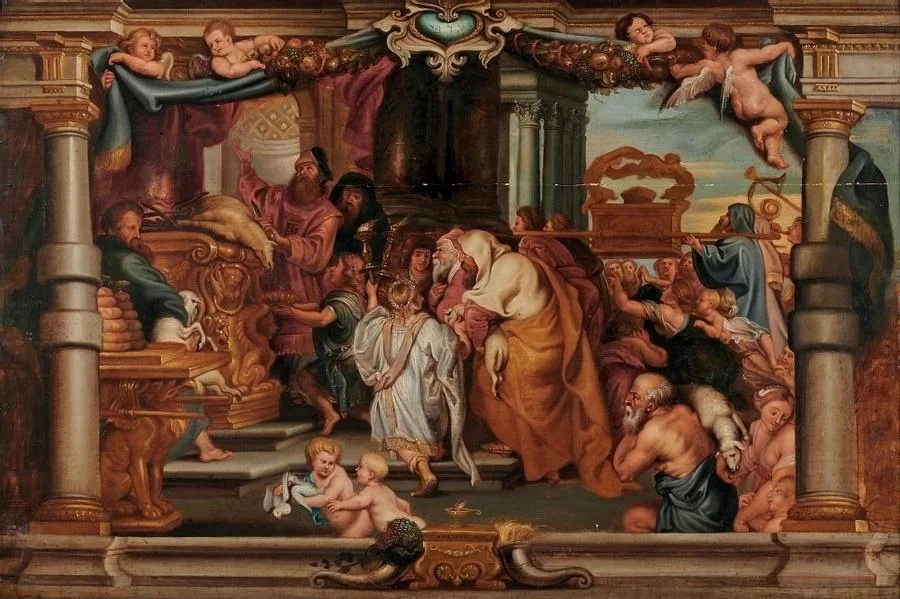
The Sacrifice of the Old Covenant by Peter Paul Rubens, 1626
Well, we are knee-deep in Leviticus now, reading passage after passage about very specific rules surrounding sacrifices and cleanliness. These laws for living helped God’s people become healthy and disciplined, instead of descending quickly into chaos in the wilderness. Under the very specific rules of a covenant relationship with the God of the Unverse, the Israelites would be united, strengthened, and protected.
We can struggle to figure out how this (often tedious) discussion of the clean and unclean applies for all time, since “All Scripture is God-breathed and is useful for teaching, rebuking, correcting and training in righteousness,” (2 Timothy 3:16). Maybe this book will be more relatable after you see the Bible Project video breakdown of it:
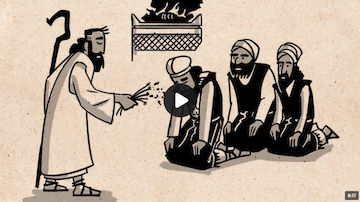
Again, the types of offerings in Leviticus 1–7.
Burnt Offering (Olah): A voluntary offering entirely consumed by fire, signifying total devotion.
Grain Offering (Minchah): An offering of flour, oil, and salt, often accompanying other sacrifices.
Peace/Fellowship Offering (Shelamim): A shared meal between God, the priest, and the offerer.
Sin Offering (Chattat): Specifically for atonement of unintentional sins.
Guilt/Reparation Offering (Asham): For offenses requiring restitution.
With all the people offering these sacrifices, you can be sure that the tabernacle was a busy place!
Next week we continue with clean and unclean people and bodily discharges. As Christy and I were discussing today’s reading, she remarked about the unfairness of the extra days of uncleanness after the birth of a girl versus a boy. That’s one of many mysteries we can’t sort out, but feel free to weigh in on anything you’ve heard or learned about this mystery. Soon we will be done with Leviticus, and then we move on to Numbers and Deuteronomy. I love Deuteronomy because is like a “greatest hits” of the the ways God has provided for his people, and we will finish the book right before Holy Week. Perfect!
In the last week of March we will celebrate finishing the complete Pentateuch (or Torah), so let’s meet to celebrate! Since we are spread around the country the meetup will likely be a mix of real-world and online togetherness, so I’d love to hear your ideas about how to make it great. Please text, email or call and tell me how you’d like to do it. Thanks!

Year in the Bible Week 7
Week Seven

Moses Breaking the Tablets by Rembrandt, 1659
A lot of folks say that when Moses went up the mountain for forty days the people just instantly rebelled, but I wonder if it was more like a slow-boiling panic. Either way, they were unable to sit and wait on the Lord, so they succumbed to idolatry and the false sense of security it can bring. They broke rule number one and worshipped false Gods. and the one true God who claimed them as his own struck them down by the thousands in judgment.
At sometime or other we have all been guilty of utter inability to wait on the Lord, and the consequences can be very, very severe. Only when God dwells among us do we truly have the confidence to carry on. In Exodus 33, when the Lord said his presence would not go with them into the promised land, Moses panicked. He begged God to change his mind in one of the Bible’s most memorable verses, Exodus 33:15. Almost 900 years later God finally did exit the scene before the Babylonians destroyed Jerusalem. and that spelled catastrophe and captivity for the whole nation. Let us never forget how easy it is to mess up, and let us always be thankful that our atonement and redemption has been provided through Jesus. Hallelujah!
Finally, here at the end of Exodus God instructs his people in appropriate worship, and his presence fills the tabernacle. Reading every detail of the building and consecration of this sacred space and its priests, we can feel the Israelites’ deep desire to be faithful and obedient to him. As the book of Exodus concludes we see a people relying on God, always watching him to see where he moves next, and following him closely. This close relationship will bring them victory after victory, but first, obedience!
For the next couple weeks we will read through Leviticus, and then we move on to Numbers. These books can seem tedious at times, but it might help to always remember just how big the nation was, and how God cared about every single one of them. I encourage you to read the details in Leviticus and Numbers carefully and thankfully, embracing the amazing strength of the covenant between God and his people. See you next week!

Year in the Bible Week 6
Week Six

Moses Strikes Water from the Rock from the ceiling of Scuola Grande di San Rocco by Jacopo Tintoretto, 1577
It’s a been a week of plagues and protection, and terror, redemption and victory.
This week started with the entire nation of Israel as slaves in Egypt and ended at Mount Sinai with them dependent of the Lord for their daily survival.
The vivd descriptions of each plague, were hard to read. Certainly, many goodhearted Egyptians were caught up in the wrath of God. Sometimes as Christians we feel like we are collateral damage in God’s retribution on someone else, but we have the comfort of knowing that God loves us, and that his plans and purposes are for his glory and our good. This can keep us courageous in difficult seasons.
I’ve always found the biblical account of manna fascinating. Lately I’ve been dieting and losing some weight, and it means that very often I’m eating the same thing day after day. But can you imagine eating the same thing every single day for forty years? The people seem ungrateful as they complain about the miracle of manna, and God calls them out for it, but I would encourage us to put ourselves in the Israelite’s shoes. God’s grace and provision don’t necessarily look like comfort and abundance, do they? The manna was their daily bread until they crossed the Jordan and tasted the promised land. I’ll bet the food of Canaan was delicious to them after forty years of the same thing! But remember that obedience bring that ultimate blessing. Later we will read about a fit of discontent where Moses ruined his chances of tasting the delicious food of Canaan by not following God’s instructions precisely.
This week God gives us the 10 commandments, and starts to build the foundations for civil law in his people. We also so early military victories by the Israelite men; fueled on manna alone! God is growing His nation!

Year in the Bible Week 5
Week Five

The Lord Answers job from the Whirlwind engraving by William Blake (1757-1827)
Hello dear readers (a nod to C.S. Lewis…),
I asked my pastor once about hearing God’s voice, admitting to weakness listening for God’s small voice to guide me. His response was perfect. He said, “God has a loud voice too, but you don’t want to hear it!”
This week we cringe as Job gets an earful of God’s loud voice. The beatdown continues for a couple more days of reading before we move on to the Book of Exodus, returning to the dynamic origin story of God’s people. However, before we move on please have a look at the synopsis video from the Bible Project. It really helps get everything tied up. See below:
https://bibleproject.com/videos/job/
All next month we will move through the Pentateuch, with supporting scripture from throughout God’s word. The next few weeks are going to be wonderful! Stay warm everybody…